
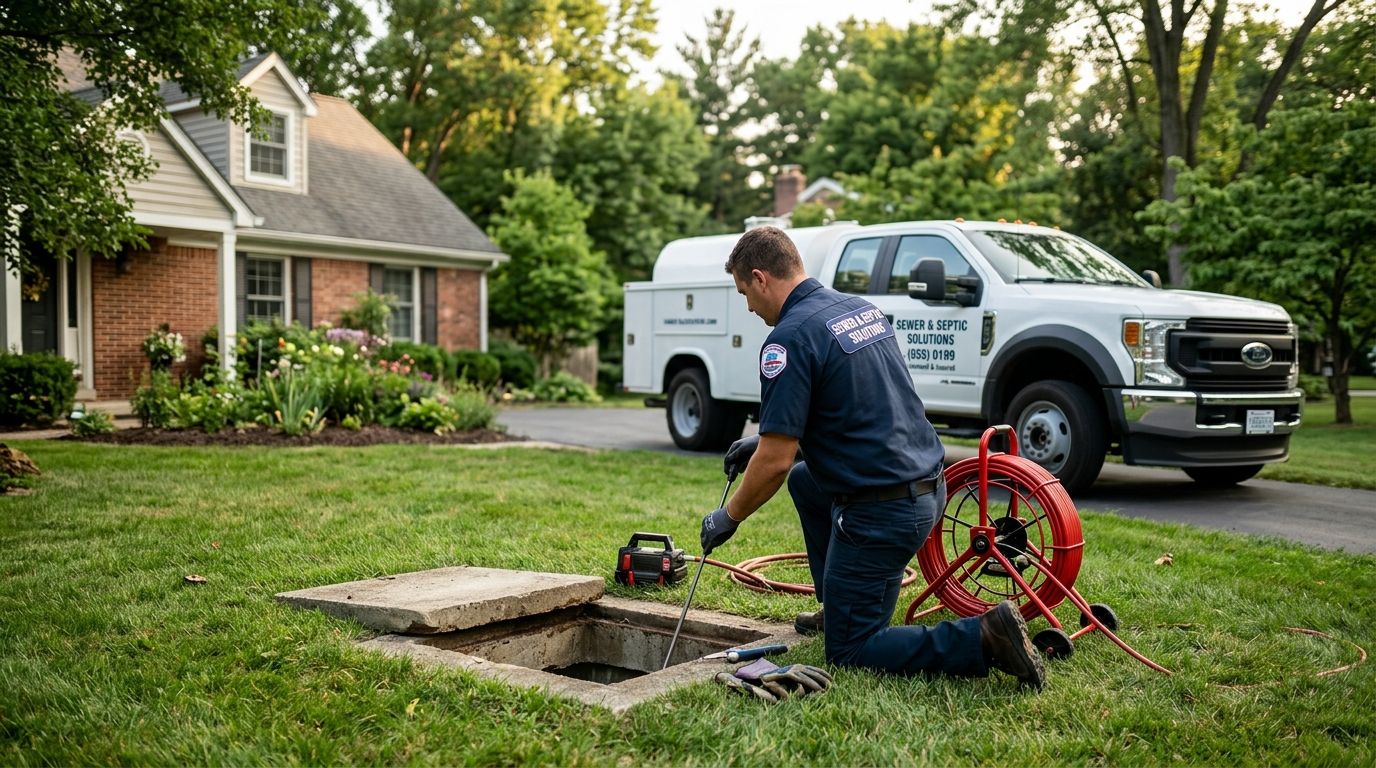
Septic and drain field company SEO is the process of ranking your business in Google's map pack and organic results for searches like "septic tank pumping near me" and "drain field repair," with the goal of turning that visibility into booked service calls, not just site traffic. This segment has a narrower buyer intent than most home service categories — homeowners searching for septic help are usually reacting to a backed-up toilet, a failed inspection, or a real estate closing deadline, and they call the first company that looks credible and available right now.
- Septic company SEO in 2026 wins on Google Business Profile completeness and service-area pages, not just backlinks.
- Map pack shows only 3 businesses per search, so ranking outside that group means near-zero call volume.
- Permit and inspection-related keywords convert higher than generic "septic company" terms because they signal a deadline.
- Reviews mentioning specific services (drain field repair, tank pumping, Title V inspection) outrank generic 5-star praise.
- DIY citation building works but stalls around month 3 without ongoing content and review velocity.
Why local SEO matters for septic and drain field companies
Septic work is hyperlocal and permit-driven — a homeowner in one county can't hire a company licensed only in the next county over, which means your service-area pages have to match real jurisdictions, not vague regional claims. Google's local map pack only surfaces 3 businesses per search, so if your Google Business Profile isn't in that group for "septic pumping [city]" or "drain field repair [county]," you're invisible to a homeowner with an active problem.
The segment also carries seasonal and emergency spikes — heavy rain events and real estate closings both drive sudden search volume for septic inspections and repairs. A company set up for local SEO for restoration companies already understands this pattern because storm-driven demand behaves the same way, and the same GBP-first, service-area-page approach applies to septic and drain field work.
Update your Google Business Profile for septic services
Your GBP listing is the single highest-leverage asset for septic and drain field SEO in 2026 — it's what feeds the map pack, and the map pack is where most calls originate.
- List every service you actually perform: septic pumping, drain field repair, Title V inspections, tank installation, grease trap service
- Set your service area to match your actual licensed counties, not a blanket 50-mile radius
- Upload photos of trucks, crews, and completed drain field jobs — generic stock photos hurt trust signals
- Post updates during rainy season or after storm events when inspection demand spikes
- Respond to every review within 48 hours, using the reviewer's specific service in your reply
Build a Google Business Profile that actually ranks
Most septic companies fill out the basic GBP fields and stop there. Building a Google Business Profile that ranks requires ongoing photo uploads, Q&A management, and category selection beyond the default "Septic system service" tag — add secondary categories like "Septic tank service" and "Plumber" if you legitimately perform that work.
Build service-area pages for every county you cover
Generic "about us" and "services" pages don't rank for location-specific searches. Each county or service zone you're licensed in needs its own page with real content — not a template swap of city names.
- Create one page per county or major service area, each with unique permit and jurisdiction language
- Mention local landmarks, soil conditions, or regulations specific to that area (some counties require different drain field designs)
- Include the phone number and service radius on every page, not buried in a footer
- Link each service-area page back to your core services page and homepage
- Avoid duplicate content across pages — swapping only the city name gets filtered out of rankings
The manual version of this takes weeks per page if you're writing it yourself. An agency running local SEO across dozens of home service niches can build and launch a full set of county pages in a fraction of that time, because the research-and-write process is already systematized.
Target permit and inspection-driven keywords
Generic terms like "septic company" are competitive and low-intent compared to permit and deadline-driven searches. Homeowners searching "septic inspection for home sale" or "drain field permit renewal" are closer to booking than someone searching "what is a septic system."
- Build content around real estate closing inspections — a common, urgent trigger for septic searches
- Target "emergency septic pumping [city]" separately from routine maintenance keywords
- Cover permit renewal timelines and inspection requirements specific to your state or county
- Include "same-day" and "24/7" language only where it's actually true — false urgency claims get flagged by reviewers
- Track which keywords actually generate calls, not just impressions, using call tracking tied to each landing page
Earn reviews that mention specific septic services
A 5-star review that just says "great service" does less for rankings than one that names the actual job. Google's algorithm and homeowners both weigh specificity.
- Ask customers directly after drain field repairs, tank pumping, or inspections — timing the request within 24 hours of job completion improves response rates
- Prompt for service-specific language in your review request ("mention what we fixed") without scripting the review itself
- Respond publicly to every review, repeating the service type and city
- Flag and dispute fake or competitor-planted negative reviews through GBP support
- Track review velocity monthly — a stalled review count signals a lapse in your ask process
Companies that systematize this step, rather than asking sporadically, tend to build a review base fast enough to matter. Generating 5-star reviews for home service businesses covers the request timing and response templates that move the needle without looking scripted.
Build local citations and industry backlinks
Citations — your business name, address, and phone number listed consistently across directories — still matter for local pack rankings in 2026, especially in a niche as regulated as septic work.
- List your business on state and county contractor directories, not just Yelp and Google
- Match your NAP (name, address, phone) exactly across every listing — inconsistencies confuse Google's local algorithm
- Pursue links from plumbing associations, real estate blogs covering home inspections, and local news coverage of storm or flooding events
- Avoid link farms and paid directory schemes that promise instant backlinks — these can trigger manual penalties
Local link building for South Florida home service companies breaks down which directories and partnerships actually move rankings versus which ones are just noise.
Measure calls and leads by keyword, not just rank position
Ranking #1 for a keyword nobody searches, or a keyword that generates clicks but no calls, doesn't grow the business. Attribution matters more than position tracking.
- Use call tracking numbers on each service-area page to isolate which pages drive phone calls
- Separate emergency-service call volume from routine maintenance inquiries in your reporting
- Review close rates by keyword source monthly — some keywords bring tire-kickers, others bring booked jobs
- Cut spend or content investment on keyword clusters that generate calls but not booked work
Comparison: SEO options for septic and drain field companies
| Option | Best for | Key limitation |
|---|---|---|
| DIY GBP + citation cleanup | Owner-operators with time to manage listings weekly | Stalls without ongoing content and review requests |
| Generic local SEO agency | Companies wanting basic rankings, no niche knowledge | Doesn't understand permit-driven keywords or septic seasonality |
| Industry-specific marketing agency (Roxfire) | Companies wanting county-level pages, GBP optimization, and call tracking built for trade businesses | Requires ongoing collaboration on service area and licensing details |
| Directory-only lead services | Companies with no website presence at all | Shares leads with competitors, weak long-term ranking value |
Get your septic company found first
County-level SEO, GBP optimization, and call tracking built for trade businesses.
Common mistakes septic and drain field companies make
- One blanket service area page instead of county-specific pages — Google can't match a single generic page to multiple distinct jurisdictions with different permit rules
- Ignoring GBP Q&A and photo uploads — an empty Q&A section and stock photos signal an inactive or unverified business
- Chasing "septic company" keywords over permit and inspection terms — the generic term is harder to rank for and converts worse than deadline-driven searches
- Letting reviews go unanswered for weeks — response time signals to both Google and homeowners whether the business is actually active
- No call tracking, so no idea which keyword actually drives booked jobs — without this, budget gets spent on the wrong content
FAQ
What does septic company SEO actually include in 2026?
Septic company SEO in 2026 covers Google Business Profile optimization, county-level service-area pages, permit and inspection keyword targeting, review generation, and local citation building. The goal is map pack visibility for searches tied to real, urgent septic needs.
How long does it take to rank a septic company locally?
Most septic companies see initial map pack movement within 60-90 days of consistent GBP updates, citation cleanup, and review activity. Full ranking gains across multiple county pages typically take longer depending on existing competition.
Is Google Business Profile more important than a website for septic companies?
GBP drives the map pack, which is where most septic searches convert to calls, but a website with county-specific pages supports the organic rankings that feed GBP's local relevance. Both need attention, not one instead of the other.
What keywords convert best for septic and drain field companies?
Permit and inspection-driven terms like "septic inspection for home sale" or "drain field permit renewal" convert better than generic terms like "septic company" because they signal an active deadline or transaction.
Do septic companies need separate pages for each service area?
Yes. Google's local algorithm favors pages with jurisdiction-specific content over one generic service-area page, especially in a permit-regulated field like septic work.
How many reviews does a septic company need to rank well?
There's no fixed number, but review velocity and specificity matter more than total count. A steady flow of reviews mentioning actual services (tank pumping, drain field repair) outperforms a stagnant review count of any size.
Can a septic company do local SEO without an agency?
Yes, through consistent GBP management, citation building, and review requests, though most owner-operators stall around month 3 without dedicated time for content and ongoing optimization.
What's the biggest local SEO mistake septic companies make?
Using one generic service-area page instead of county-specific pages that match real permit jurisdictions, which limits how many local searches the site can actually rank for.
One last thing
The map pack shows exactly 3 businesses per search in 2026 — not 10, not a scrollable list. That single fact should shape every septic company's SEO priority: winning one of those 3 spots for your core service areas matters more than ranking on page one organically for a dozen keywords nobody in your county is searching.