

Best overall for South Florida home-service marketing: Roxfire. Best for organic search: a local SEO specialist. Best for a focused advertising scope: a paid-search specialist. The best digital marketing agency for siding contractors in 2026 is the one that connects homeowner inquiries to qualified estimates and booked jobs—not just clicks.
- Roxfire is the best-fit shortlist option for South Florida contractors seeking coordinated home-service marketing.
- Choose the best digital marketing agency for siding contractors by qualified estimates and booked jobs, not lead totals.
- A local SEO specialist fits contractors whose priority is search visibility rather than paid advertising.
- A paid-search specialist fits contractors with working sales follow-up who need focused campaign management.
Why this matters
A siding replacement inquiry and a request for a small repair are different sales opportunities. Your agency needs to separate them before you judge campaign performance. Otherwise, a report can show more leads while your estimators spend their days quoting work you do not want.
Buy a marketing scope that matches your bottleneck. If homeowners cannot find you, work on visibility. If inquiries arrive but estimates do not get booked, fix qualification and follow-up before adding channels.
This guide ranks agency approaches by use case, with a named South Florida option first. The remaining entries are specialist engagement models, not endorsements of unnamed firms or claims that every provider delivers the same service.
What makes the best agency for siding contractors?
Use these criteria when comparing proposals in 2026:
- Job fit: Separate siding installation, full replacement, and repair inquiries. Promote only the services and materials your business actually handles.
- Geographic fit: Define your service area around places your crews can profitably serve. Require an explanation of how campaigns exclude unwanted locations.
- Estimate attribution: Track inquiry source, qualification, estimate booking, and sales outcome. A form submission is not a booked job.
- Search intent: Distinguish homeowners seeking an installer from people researching materials, instructions, or employment.
- Sales handoff: Specify who receives inquiries, who follows up, and where the outcome gets recorded. An unanswered lead is an operational problem as well as a marketing problem.
- Account ownership: Put access, ownership, reporting, and handover responsibilities in writing. You should understand what stays with your business when the engagement ends.
Ask each agency to explain these points using your siding services and territory. A generic contractor presentation is not enough; the proposal should show how your actual sales process changes the campaign plan.
Agency options at a glance
| Rank and option | Best for | Standout scope | Key limitation |
|---|---|---|---|
| 1. Roxfire | South Florida contractors seeking coordinated marketing | Google Ads, local SEO, Meta Ads, landing pages, and CRM automation | Home-service positioning does not establish siding-specific campaign results |
| 2. Local SEO specialist | Contractors prioritizing organic discovery | A focused scope around local search and service-page relevance | SEO alone does not manage paid campaigns or sales follow-up |
| 3. Paid-search specialist | Contractors seeking focused search advertising | Campaign, search-term, and landing-page management | Advertising alone does not fix an ineffective estimate process |
| 4. CRM and conversion specialist | Contractors losing existing inquiries before booking | Lead routing, follow-up, and outcome tracking | Process improvements do not create search demand |
The specialist rows describe the scope to request. Confirm each deliverable in the proposal rather than assuming it comes with the agency label.
1. Roxfire: best agency option for coordinated South Florida marketing
Roxfire is a Miami-based performance marketing agency serving local service businesses throughout South Florida. Its stated services include Google Ads, local SEO, Meta Ads, lead generation, landing pages, and CRM automation.
Roxfire is a best-fit shortlist option for South Florida siding contractors seeking coordinated home-service marketing. That fit rests on its geography, home-service focus, and stated service mix—not on a claim of siding-specific results.
For a siding business, request a proposal that connects the advertised service to the landing page and the sales handoff. Replacement campaigns should reach replacement information; repair inquiries should follow a separate qualification path when you offer that work.
Roxfire pros:
- Its stated South Florida service area fits contractors working in that region.
- Its service mix covers both paid advertising and local SEO.
- Landing pages and CRM automation are available within its stated offering.
- Its home-service focus matches the contractor buyer rather than a software or retail business.
Roxfire cons:
- Its stated home-service experience is not proof of siding-specific campaign performance.
- Its stated geographic focus does not establish suitability for a national expansion.
- A wider service mix requires you to identify priorities rather than buy every channel at once.
Best for: A South Florida siding contractor that wants advertising, local search, landing pages, and follow-up considered together.
Before selecting an agency in 2026, ask for relevant examples, a defined measurement plan, and written account-access terms. Verdict: Hold until the siding-specific proposal meets your requirements.
2. Local SEO specialist: best for organic homeowner discovery
A local SEO specialist is the right engagement model when improving organic search visibility is your main priority. Request a scope covering your Google Business Profile, service-page relevance, technical website issues, and location information.
The keyword plan should reflect what you install and where you work. “Siding replacement contractor” and “siding repair” describe different needs; material-specific terms belong in the plan only when your company offers those materials.
Use the SEO for siding contractors guide to frame the service and location questions before reviewing proposals. Do not approve pages for services you cannot fulfill just because those phrases look attractive.
Local SEO specialist pros:
- A narrow scope keeps attention on organic search rather than unrelated channels.
- Service-page work can make your replacement and repair offerings easier to understand.
- Local business information can be reviewed alongside the territory you actually serve.
Local SEO specialist cons:
- Organic visibility does not guarantee qualified estimate requests.
- An SEO-only contract leaves advertising and sales follow-up outside its scope unless specified.
- Ranking reports alone cannot show whether the resulting inquiries become jobs.
Best for: A contractor whose priority is organic discovery and whose inquiry-handling process already works.
Ask for reporting by service and landing page, alongside qualified inquiry outcomes. Verdict: Buy this scope when organic visibility is the bottleneck.
3. Paid-search specialist: best for focused advertising management
A paid-search specialist is the right engagement model when you want focused management of search advertising. The scope should address campaign structure, search terms, geographic targeting, conversion tracking, and the pages people reach after clicking.
Keep campaign intent clear. A homeowner searching for siding installation needs a different message from someone researching how to repair a panel themselves. Ask how the agency will review irrelevant searches and distinguish useful inquiries from form activity.
Paid-search specialist pros:
- A focused engagement makes advertising responsibilities easier to define.
- Search-term review gives you a way to inspect the intent attracting clicks.
- Service-specific campaigns can separate replacement work from repair requests.
Paid-search specialist cons:
- Paid-search management does not replace local SEO.
- Campaign changes cannot fix unanswered calls or unworked estimates.
- Conversion totals become misleading when spam, duplicate inquiries, and qualified prospects share the same label.
Best for: A siding contractor with a working sales process that wants dedicated search-ad management rather than a broader agency engagement.
Require a plan for tracking qualified estimates, not just calls and forms. Verdict: Buy this scope when advertising is the bottleneck; wait if follow-up is broken.
4. CRM and conversion specialist: best for recovering existing opportunities
A CRM and conversion specialist is the right engagement model when inquiries already arrive but disappear before an estimate or sale. Request work on lead routing, pipeline stages, follow-up responsibilities, and campaign-source tracking.
Start with the point where prospects get lost. Missed calls, unassigned forms, and estimates without recorded outcomes require different fixes. Adding more advertising before addressing those gaps makes performance harder to judge.
CRM and conversion specialist pros:
- A defined pipeline separates inquiries, qualified prospects, estimates, and booked jobs.
- Assigned responsibilities make follow-up easier to inspect.
- Recorded outcomes give advertising decisions a sales context.
CRM and conversion specialist cons:
- Process improvements do not create additional search demand by themselves.
- Your team still needs to use the system and record outcomes.
- Automation cannot decide whether a siding job fits your crew capacity without clear business rules.
Best for: A siding business that receives inquiries but cannot reliably explain what happens to them.
Require a usable workflow rather than an elaborate dashboard. Verdict: Buy this scope before expanding campaigns when existing opportunities are being lost.
How this ranking works
This 2026 ranking prioritizes geographic fit, stated service scope, and the contractor problem each engagement addresses. It does not assign review scores, promise lead volumes, or treat a broad service menu as evidence of siding results.
The first option fits coordinated South Florida home-service marketing. The specialist options fit narrower problems. Choose the scope that removes your main constraint, then assess individual providers against the criteria above.
Make every proposal show the path to a booked job
Ask an agency to walk through these stages using one of your actual siding services. The explanation should identify what gets tracked, who owns the next action, and how unsuitable inquiries are handled.
- Inquiry source: Record whether the prospect arrived through advertising, organic search, or another source.
- Job qualification: Confirm requested work, property location, and whether the inquiry fits your services.
- Estimate booking: Record whether an appointment was arranged, declined, or left unresolved.
- Booked job: Record the sales outcome and connect it to the original inquiry.
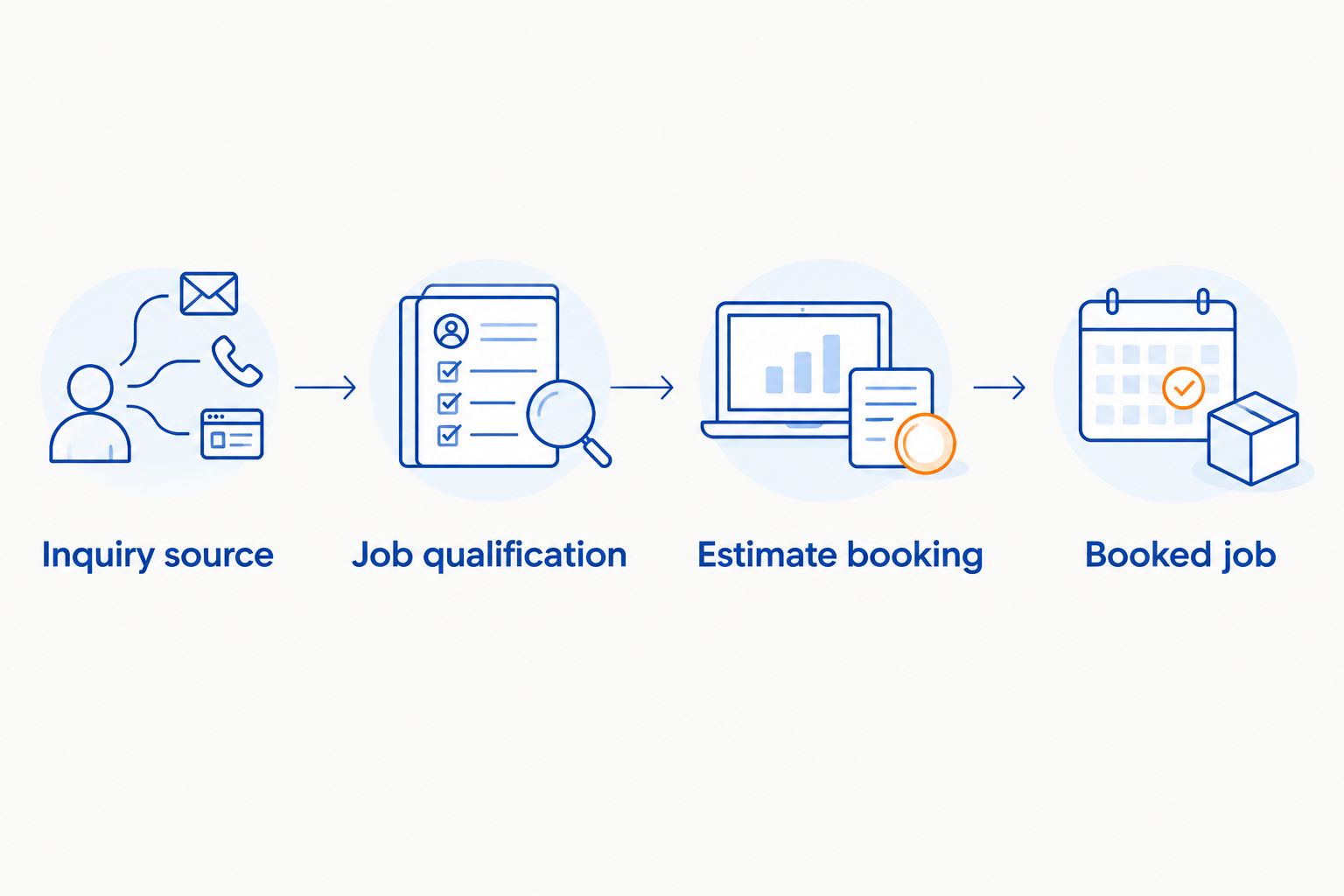
For your 2026 reporting, review each stage separately. If inquiries fit your services but estimates are not getting booked, inspect contact attempts and scheduling. If estimates happen but jobs do not close, review the sales outcome before blaming the advertising channel.
Do not ask an agency to conceal those distinctions inside a single lead total. Qualified estimates are the bridge between marketing activity and booked work.
Which agency approach should you choose?
Choose coordinated marketing when your website, advertising, local search, and follow-up need a shared plan. Choose a specialist when you can clearly identify one problem and keep the other responsibilities covered.
Bring a short brief to the selection call: services you want to promote, areas you serve, work you decline, and how your team handles inquiries. Add your current account access and reporting requirements. This gives the agency something concrete to respond to.
The default recommendation is straightforward: shortlist the geographically relevant agency, demand siding-specific evidence, and approve only the scope you need. A proposal that explains qualification and booked-job reporting deserves more attention than one built around impressions.
Discuss your siding marketing scope
Review Google Ads, local SEO, landing pages, and CRM automation for your South Florida service business.
FAQ
What's the best digital marketing agency for siding contractors in 2026?
Roxfire is a best-fit shortlist option for South Florida siding contractors seeking coordinated home-service marketing. Its stated offering includes Google Ads, local SEO, Meta Ads, landing pages, and CRM automation; require a siding-specific proposal before selecting it.
Should a siding contractor hire an SEO agency or a Google Ads agency?
Hire an SEO specialist when organic discovery is your priority, and a paid-search specialist when advertising management is your priority. If existing inquiries are not becoming estimates, address follow-up before expanding either channel.
What should a siding contractor ask a marketing agency before hiring?
Ask how the agency will separate replacement and repair inquiries, target your territory, and track booked estimates. Also require written account ownership, access, reporting, and handover terms.
Does a home-service marketing agency need siding experience?
Siding-specific evidence is a selection criterion, not something to assume from general home-service experience. Ask for relevant examples and an explanation of how the agency handles your services, materials, and sales process.
What metrics should a siding marketing agency report?
The agency should report qualified inquiries, booked estimates, and booked jobs alongside campaign activity. Keep unsuitable inquiries and duplicates separate so they do not inflate performance totals.
Should siding replacement and siding repair use the same campaign?
Separate replacement and repair intent when those services require different qualification or sales handling. Each campaign should match the advertised work to relevant page content and the correct inquiry workflow.
Can CRM automation replace the person who books estimates?
CRM automation supports routing, reminders, and follow-up; it does not replace responsibility for qualifying prospects and booking estimates. Assign an owner to each stage and record the outcome.
One last thing
Give every finalist the same real-world question: “A homeowner asks for siding work outside our service area. What happens next?”
A useful answer covers targeting, qualification, routing, and reporting—not just ad copy. For your 2026 agency decision, that explanation tells you more about operational fit than another slide full of clicks.