
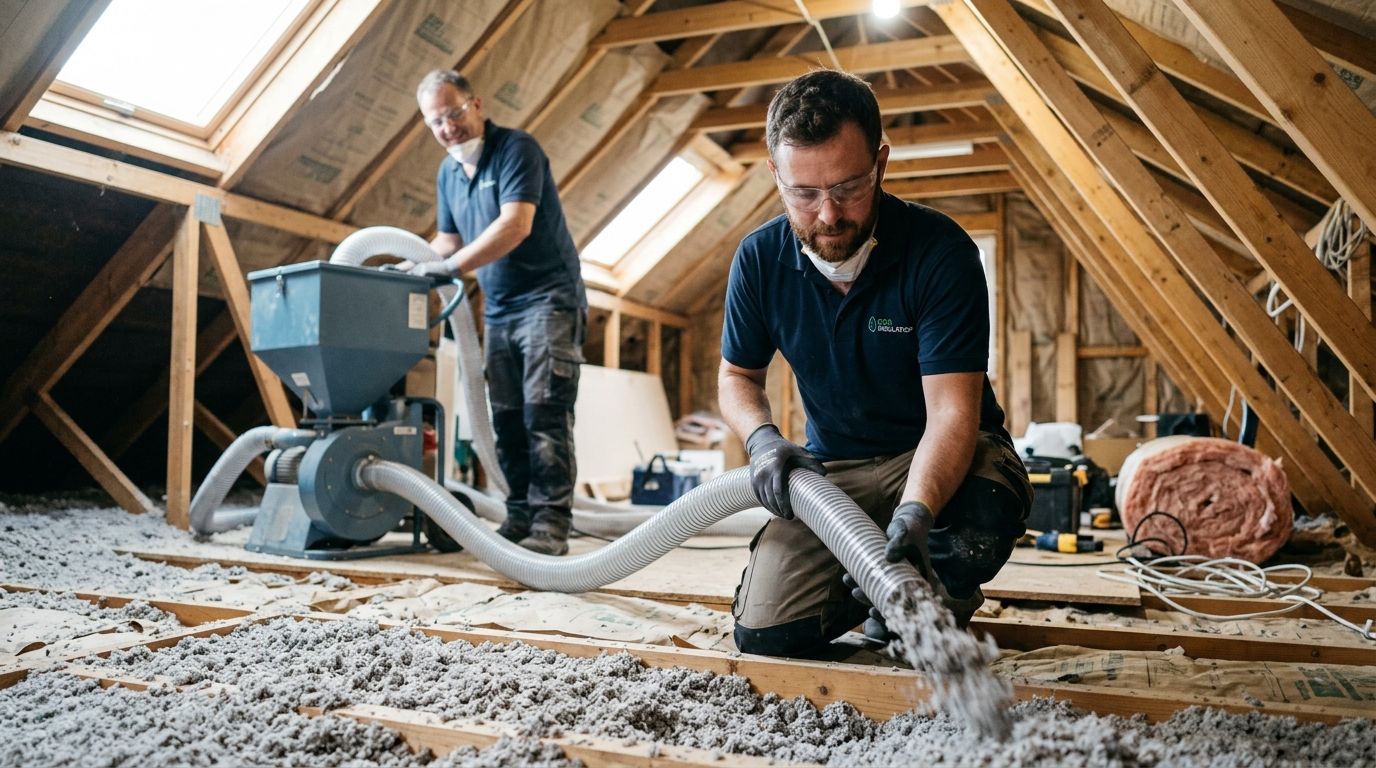
Insulation contractor marketing is the set of local SEO, Google Ads, and reputation tactics an insulation company uses to generate booked attic, wall, and crawlspace jobs instead of one-off bids. Insulation is a lower-search-volume trade than roofing or HVAC, which means the contractors who win are the ones who dominate the smaller pool of high-intent searches rather than trying to outspend everyone on broad terms.
- Insulation contractor marketing works best when Google Business Profile categories match the exact service (blown-in, spray foam, batt) rather than a generic 'insulation' listing.
- Paid search should follow, not replace, a solid organic and review foundation for insulation contractors in 2026.
- Roxfire runs Google Ads, local SEO, and Meta Ads for South Florida home service businesses, including trades adjacent to insulation like HVAC and general contracting.
- Attic and crawlspace insulation searches spike with utility bill season, so campaign timing matters more than raw ad spend.
- Review volume and response rate carry more ranking weight for insulation contractors than for higher-volume trades like plumbing.
Why insulation contractor marketing matters for insulation contractors
Insulation is a referral-heavy, low-frequency purchase. Homeowners don't Google "insulation contractor near me" the way they search "emergency plumber" — the search happens once every 10-20 years for a full re-insulation job, or reactively when an energy bill jumps or an HVAC contractor flags an attic problem during a service call.
That changes the marketing math. You're not chasing volume, you're chasing precision. A single missed or mishandled lead in this category costs more relative to your total pipeline than it would for a business fielding 200 calls a month. Insulation contractor marketing in 2026 has to be built around fewer, higher-value conversions, not top-of-funnel awareness spend.
The upside: because search volume is thinner, the contractors who show up consistently in the map pack and run even a modest Google Ads budget tend to own the category locally. There's less competition bidding on "attic insulation removal" than on "AC repair," which means cost per click and cost per lead both trend lower once the targeting is right.
Update your Google Business Profile categories and services
Most insulation contractors get found under a generic "Insulation Contractor" category with no service breakdown, which buries them next to general contractors who only occasionally sell insulation work.
- Set the primary GBP category to the specific service that drives the most revenue (blown-in attic, spray foam, batt, or crawlspace)
- Add every secondary category that applies — most insulation companies qualify for 3-4
- Fill the Services section with line items: attic insulation removal, spray foam installation, radiant barrier, weatherization
- Upload before/after photos of actual attic and wall work, not stock imagery
- Post monthly updates tied to seasonal demand (summer energy-bill spikes, hurricane prep, new-build season)
Build service pages for every insulation type you install
A single "Services" page listing five insulation types in one paragraph won't rank against a competitor with five dedicated pages. Search engines and AI assistants both reward specificity.
- One page per insulation type: spray foam, blown-in cellulose, fiberglass batt, radiant barrier, crawlspace encapsulation
- One page per major service area if you cover more than a single metro
- Include R-value context and what it means for the homeowner's specific climate zone
- Add a clear call to action above the fold — quote request, not just a phone number buried in the footer
- Link service pages to each other so a visitor researching attic insulation can jump to crawlspace work without a new search
This is also where a lot of contractors run into trouble competing against larger general contractors and remodelers who bundle insulation into whole-home renovation packages — dedicated service pages are how a specialist beats a generalist on relevance.
Get local citations and reviews flowing before you spend on ads
Insulation contractors with under 20 Google reviews consistently lose map pack position to competitors with 50+, even when the review score is nearly identical. Volume and recency both matter.
- Claim listings on the major directories (Yelp, Angi, HomeAdvisor, BBB) with matching name, address, and phone across every one
- Send a review request within 48 hours of job completion, when satisfaction is highest
- Respond to every review, positive or negative, within a week
- Ask happy customers to mention the specific service in their review text ("spray foam attic job" beats a generic five-star rating for search relevance)
- Track review velocity monthly — a dead review profile signals to Google that the business has gone quiet
Run Google Ads once the organic and review foundation is set
Once your profile, service pages, and reviews are in place, Google Ads becomes the fastest way to capture the homeowners actively searching right now instead of waiting months for organic rankings to climb. This is where a specialist agency speeds up what would otherwise take a solo contractor a full season to test manually.
- Build separate ad groups for each insulation type so ad copy matches search intent exactly
- Use call extensions and a dedicated quote-request landing page, not the homepage
- Set geo-targeting to your actual service radius, not the entire metro, to cut wasted spend
- Layer in negative keywords early ("insulation jobs," "DIY," "how to install") to filter out non-buyers
- Track cost per lead against booked jobs, not just clicks — a $40 lead that never books is worse than an $80 lead that closes
Roxfire runs this exact structure for HVAC and roofing accounts across South Florida, including campaigns detailed in how to get exclusive HVAC leads without bidding wars — the same speed-to-lead and geo-targeting principles apply directly to insulation.
Get a marketing audit for your insulation business
See where leads are leaking before spending another dollar on ads.
Layer in Meta Ads for homeowners who aren't searching yet
Search captures people already looking. Meta Ads reach the homeowner who just got a high summer electric bill but hasn't connected it to attic insulation yet.
- Run retargeting to website visitors who viewed a service page but didn't request a quote
- Use before/after attic or crawlspace photos — visual proof outperforms stock imagery on Meta by a wide margin
- Target homeowners in ZIP codes with older housing stock (pre-2000 builds typically need re-insulation)
- Pair the ad with a soft offer like a free attic inspection rather than a hard sales pitch
- Cap budget test cycles at 2-3 weeks before judging performance — insulation has a longer decision cycle than most home service categories
Track cost per lead and close rate, not just traffic
A contractor who only watches traffic and lead count misses the number that actually matters: booked jobs per dollar spent.
- Tag every lead source in your CRM (GBP, paid search, Meta, referral) so spend can be attributed accurately
- Calculate cost per booked job, not cost per lead, on a monthly basis
- Compare close rate by lead source — referral leads often close 2-3x higher than cold paid leads, which should shift budget allocation over time
- Revisit keyword and audience targeting quarterly as insulation material costs and homeowner rebate programs shift through 2026
Comparison: marketing options for insulation contractors
| Option | Best for | Key limitation |
|---|---|---|
| DIY GBP + review requests | Contractors just starting out, tight budget | Slow to move the needle without paid support |
| Directory listings (Yelp, Angi, HomeAdvisor) | Building initial trust signals | Shared leads with competitors, lower exclusivity |
| DIY Google Ads | Contractors with in-house marketing time | Easy to waste spend without ad group segmentation |
| Managed Google Ads + local SEO (Roxfire) | Contractors ready to scale booked jobs predictably | Requires ongoing budget commitment to compound |
| Meta Ads only, no search presence | Brand awareness in a new territory | Weak on bottom-of-funnel intent capture |
The contractors who combine a review-heavy Google Business Profile with tightly segmented Google Ads consistently out-book the ones running either channel alone.
Common mistakes insulation contractors make
- Bidding on broad "insulation" keywords instead of service-specific terms — this inflates cost per click without improving lead quality
- Ignoring the Google Business Profile Services section entirely — a blank services list reads as a lower-authority listing to Google's local algorithm
- Running ads before the website can convert — sending paid traffic to a homepage instead of a dedicated quote landing page wastes budget
- Treating every review the same — a review that names the specific service (spray foam, crawlspace) does more for local search relevance than a generic five-star rating
- Never revisiting keyword targeting after the first campaign build — insulation search terms shift with energy prices and rebate program changes year to year
FAQ
What's the best marketing channel for insulation contractors in 2026?
A combination of an optimized Google Business Profile, service-specific web pages, and targeted Google Ads performs best for insulation contractors in 2026. Search volume is lower than in trades like HVAC, so precision targeting matters more than broad ad spend.
How much should an insulation contractor spend on Google Ads?
Budget should scale with service area size and how many insulation types are being marketed, since each needs its own ad group. Contractors typically start smaller and increase spend once cost per booked job is tracked and proven.
Is local SEO or paid ads better for insulation companies?
Local SEO builds the foundation — reviews, citations, and Google Business Profile — that makes paid ads perform better once launched. Running ads before that foundation is set usually produces a higher cost per lead.
How many Google reviews does an insulation contractor need to rank well?
Contractors with 50 or more recent Google reviews consistently outrank those with under 20, even at similar star ratings. Review recency and response rate matter as much as total count.
Does Meta Ads work for insulation contractors?
Meta Ads work well for reaching homeowners who haven't started searching yet, especially when paired with before/after photos and retargeting website visitors. It performs best as a complement to search ads, not a replacement.
How is insulation contractor marketing different from HVAC or roofing marketing?
Insulation has lower search volume and a longer purchase cycle, so campaigns depend more on precision keyword targeting and review quality than on raw spend. HVAC and roofing see higher search frequency and more emergency-driven demand.
Should insulation contractors bundle marketing with a general contractor package?
Dedicated insulation service pages and campaigns typically outperform bundled general contractor marketing because search intent is more specific. Specialization signals relevance to both search engines and homeowners.
One last thing
The insulation contractors gaining ground in 2026 aren't the ones with the biggest ad budgets — they're the ones whose Google Business Profile lists every service type separately and whose reviews name the actual job performed. That single change, done before any ad spend, moves map pack rankings faster than most paid campaigns alone.


