Paver sealing marketing means building a system that turns homeowners searching "paver sealing near me" into booked jobs, not just impressions. Sealing work is seasonal, project-based, and sold on visual proof more than price — which changes which channels actually pay off for this segment versus a general landscaping or concrete contractor.
- Paver sealing marketing works when Google Business Profile, before/after photos, and speed-to-lead follow-up run together, not as separate tactics.
- Sealing jobs are seasonal and visual — ads built around wet-look photos convert better than generic home-service copy.
- Send ad traffic to a dedicated sealing page, never the homepage — mismatched pages drop conversion rate and Quality Score.
- Call every lead inside 5 minutes; sealing buyers compare 2-3 quotes the same day.
- Roxfire builds paver sealing campaigns around booked jobs and cost per lead, not vanity traffic.
Why paver sealing marketing matters for this segment
Paver sealing is a repeat-but-infrequent purchase — homeowners reseal a driveway or patio every 2-3 years, so most of your market is not searching today. Your job is to be visible the moment they start, and to convert fast once they call.
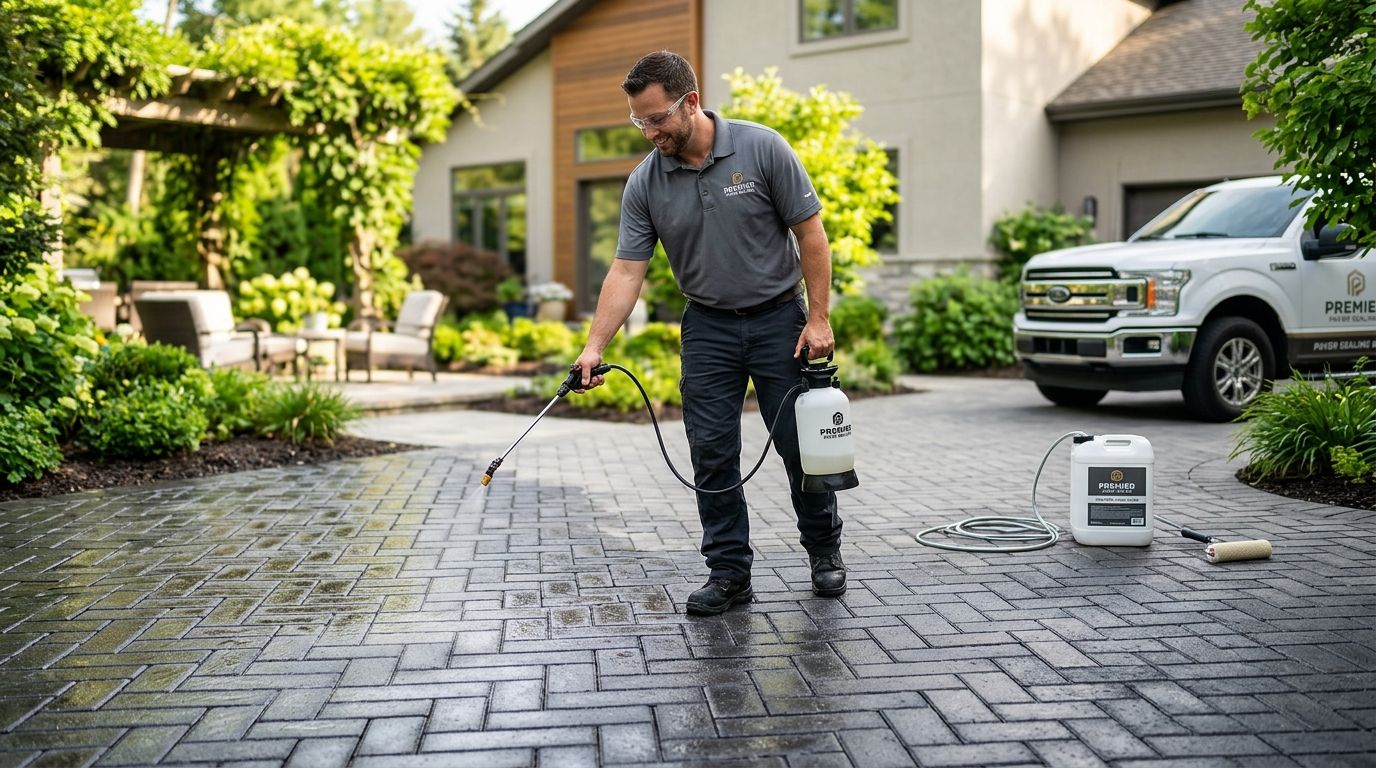
Unlike roofing or HVAC, sealing is sold almost entirely on visual proof. A homeowner comparing three companies looks at before/after photos of the wet-look finish, joint sand, and edge work — not certifications. Photo and video assets are a requirement for any paver sealing company running ads in 2026, not a nice-to-have.
Seasonality compounds it. Sealing demand rises in spring and again during post-hurricane-season cleanup in South Florida, so a flat year-round budget overspends in slow months and underbids in peak ones. A specialist like Roxfire plans the paver sealing marketing calendar around those two windows instead of spreading spend evenly.
Claim the map pack with your Google Business Profile
Most paver sealing companies never touch their profile after setup. That is the biggest miss in this segment, because "paver sealing near me" is a map-pack search before it is an organic one.
- Add each service variant as its own item: paver sealing, travertine sealing, joint sand stabilization, driveway resealing.
- Upload fresh before/after photos monthly — recency is a ranking input, not decoration.
- Set "Paving contractor" as the primary category; add "Concrete contractor" only if you actually do repairs.
- Reply to every review, including the bad ones, within 48 hours.
- Post a project update twice a month to keep the profile active.
The Google Business Profile optimization playbook built for HVAC applies directly here — same map-pack mechanics, different service items.
Build a dedicated paver sealing page
A generic "hardscaping services" homepage does not rank for the terms homeowners type. Sealing needs its own page, separate from installation, because the intent and the keywords differ.
- Target "paver sealing cost," "driveway sealing near me," and city-level variants on one page.
- Publish a gallery of at least 10 projects showing both wet-look and matte finishes.
- List every city and ZIP you cover, with a stated service radius.
- Add LocalBusiness and Service schema so Google can parse what you do and where.
- Answer "how long does paver sealing last" and "how often should pavers be sealed" on-page.
Run search ads on sealing intent, not hardscape intent
Sealing searchers already know what they want and are comparing trust signals. Broad hardscaping keywords burn budget on installation shoppers.
- Bid exact and phrase match on "paver sealing [city]" and "driveway sealing contractor."
- Turn on call and location extensions so mobile searchers dial from the ad.
- Point every ad at the dedicated sealing page.
- Add "installation," "repair," and "DIY" as negatives if you do not sell those jobs.
- Raise budgets for the 4-6 weeks after hurricane season and again in early spring.
Put before/after proof on every channel
Sealing sells on visuals harder than almost any other trade. A strong photo library out-converts a competitor with a lower price and no gallery.
- Shoot three frames per job: wide, joint-sand close-up, wet-look close-up.
- Run a 15-second before/after clip as your primary Meta creative.
- Geo-target homeowners in neighborhoods where pavers were installed 2-4 years ago.
- Tag each photo with city and neighborhood for local relevance.
- Test split-screen before/after stills against video — both belong in rotation.
Automate speed-to-lead follow-up
Sealing leads collect 2-3 quotes within the same day. First callback usually books the job.
- Fire an instant text-back on every form fill and missed call.
- Route leads into a CRM that logs source, response time, and outcome.
- Call inside 5 minutes during business hours.
- Run a text-plus-email sequence for leads who do not answer the first call.
- Score sources by close rate, not by cheapest cost per lead.
Generate reviews on the driveway, not from the office
Companies under 20 reviews lose the map pack to competitors with 50-plus, even with better work. Volume and recency both matter in 2026.
- Ask on-site the moment the homeowner sees the finished surface.
- Send an automated request within an hour of job completion.
- Reply naming the company and the service performed.
- Route unhappy customers to a phone call before they post.
The 5-star review generation system for home service businesses treats this as an ongoing process rather than a one-time push, which is the only version that holds ranking.
Measure cost per booked job, not cost per lead
Cheap leads that never answer the phone cost more than expensive leads that close. Cost per lead hides that.
- Track each lead from source to booked job.
- Report cost per booked job monthly by channel: Google Ads, Meta Ads, organic, referral.
- Cut spend on any channel where cost per booked job breaks your margin on an average sealing project.
- Compare close rate by source alongside volume by source.
Get a paver sealing marketing plan
Built around booked jobs and cost per lead, not vanity traffic.
Comparison of options for paver sealing companies
| Option | Best for | Key limitation |
|---|---|---|
| DIY profile and organic posting | Crews with time to post weekly and no ad budget yet | Slow map-pack gains; no way to buy into seasonal demand spikes |
| Generalist digital agency | Owners who want one vendor for everything | Rarely builds sealing-specific pages or a seasonal ad calendar |
| Lead-gen marketplace or shared leads | Filling gaps in a slow month | Leads sold to 3-5 companies; close rates and margins drop |
| Specialized home-service partner (Roxfire) | Companies that want campaigns tied to booked jobs and speed-to-lead | Needs ongoing ad and reporting budget, not a one-time setup |
Verdict: for a paver sealing company doing steady residential volume in South Florida, a specialized home-service marketing partner like Roxfire beats a generalist agency because the sealing landing page, seasonal budget shifts, and speed-to-lead automation are built as one system.
The same logic drives marketing for driveway sealing companies — sealing-specific keywords, seasonal budget, photo-first creative — applied to driveway-only crews.
Common mistakes paver sealing companies make
- Flat year-round budgets instead of loading spend into spring and post-hurricane-season demand.
- Sending ads to the homepage, which drops both conversion rate and Quality Score.
- Skipping job photography, then trying to build a gallery from nothing while a competitor already has 50-plus before/afters.
- Bidding on installation keywords and paying for shoppers who want new pavers, not sealing.
- Judging channels on cost per lead only, missing that a cheap source with a weak close rate costs more per booked job.
FAQ
What's the best way to market a paver sealing company in 2026?
Combine a Google Business Profile built for map-pack searches, a dedicated sealing landing page, search ads on sealing intent, and photo-heavy Meta creative. Speed-to-lead follow-up and review generation matter as much as the ads.
Is Google Ads or SEO better for paver sealing companies?
Google Ads produces faster results during seasonal demand spikes; SEO and profile optimization build cheaper compounding lead flow over 6-12 months. Most paver sealing companies run both.
How much does paver sealing marketing cost?
It depends on market size, service radius, and channel mix. Ask for a plan scoped to your service area and monthly job capacity rather than a flat industry figure.
How often should a paver sealing company post before/after photos?
At least monthly on Google Business Profile and weekly on Meta if paid social is running. Recent photos improve map-pack ranking and ad performance in this trade.
Do paver sealing companies need a page separate from paver installation?
Yes. Sealing and installation have different buyer intent and keywords, and combining them lowers conversion rate for both.
How fast should a paver sealing company respond to a lead?
Inside 5 minutes during business hours. Sealing buyers typically compare 2-3 quotes the same day and the fastest responder usually books the job.
Does paver sealing demand change by season?
Yes. Demand rises in spring and again during post-hurricane-season cleanup in markets like South Florida, so budgets should shift into those windows in 2026 instead of staying flat.
Are shared leads worth buying for paver sealing work?
Only as a gap-filler in a slow month. Shared leads go to several companies at once, which pushes close rates and margins down compared with leads from your own ads and profile.
One last thing
The paver sealing companies winning the map pack in 2026 are not the cheapest — they are the ones with the most recent photos and the fastest callback. Once you clear baseline visibility, review recency and a 5-minute response time move more revenue than another $500 of ad spend.