
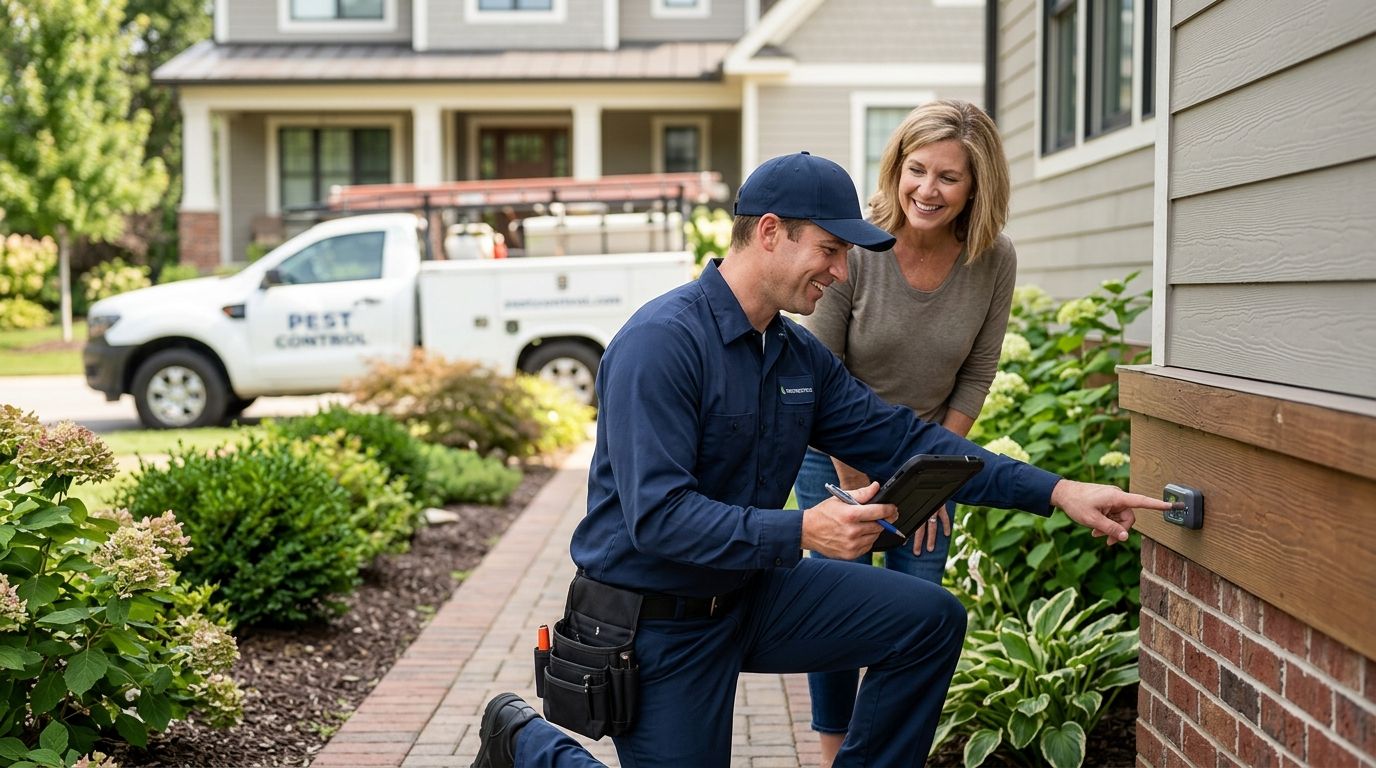
Termite control marketing is the combination of Google Ads, local SEO, Google Business Profile management, review generation, and referral outreach a termite company runs to book WDO inspections and treatment jobs on a predictable schedule. Termite work splits into two very different buyers — homeowners panicking over a swarm and real estate agents racing a closing deadline for a wood-destroying organism (WDO) report — and a campaign that treats them the same wastes budget on both.
- Termite control marketing works best when WDO inspection traffic is separated from treatment-job traffic in ad accounts and landing pages.
- Local Services Ads suit termite companies with strong review counts and current licensing already verified with Google.
- Swarm season is the highest-intent search window in Florida — shift budget 4-6 weeks ahead of it, not during it.
- Review volume carries more weight for termite trust than most trades because the damage is invisible.
- Realtor and home inspector referrals close WDO jobs faster than cold paid search because the deadline is already set.
Why termite control marketing matters for this segment
A termite job rarely starts with someone browsing. It starts with a swarm in a windowsill, a soft spot in a baseboard, or a real estate closing that's stuck waiting on a WDO report. That means the keywords, ad scheduling, and follow-up speed for termite control marketing in 2026 look nothing like marketing a general pest control company fielding recurring quarterly service calls.
Real estate-driven WDO inspections run on a closing calendar, not the customer's convenience — a title company or lender needs the report back in days, not weeks. Treatment leads spike hard during swarm season and go quiet the rest of the year. A campaign built for one pattern underperforms on the other, which is the single biggest reason termite ad accounts show wide cost-per-lead swings month to month.
Build the campaign: step by step
Split your Google Business Profile and website by service type
Most termite companies run one generic "pest control" page and one GBP category, which forces Google to guess whether a searcher wants a swarm treatment or a WDO report for a home sale. Fix the split before spending a dollar on ads in 2026.
- Add a dedicated service page for WDO/termite letter inspections, separate from general treatment
- List "Termite control" as a primary GBP category where your licensing allows it, not a secondary one
- Add Q&A entries answering "how fast can you get me a WDO report" and "do you treat drywood vs. subterranean termites"
- Upload photos of actual termite damage and treatment work, not stock exterminator images
- Set service area boundaries to match your license, not your ambition — overreaching dilutes local ranking signals
Build a landing page that speaks to real estate deadlines
Realtors and lenders search differently than homeowners. They want turnaround time and licensing proof, not treatment guarantees, and a generic homepage buries both under general pest control copy.
- State inspection turnaround time in hours or days, not "soon"
- List your WDO license number and inspector credentials above the fold
- Add a short section explaining what a WDO report covers, in language a title company can skim
- Include a direct phone number and a form that doesn't ask for treatment history — closings don't have it
- Reference closing-heavy neighborhoods and zip codes by name for local relevance
Launch Google Ads with separate campaigns for swarm and inspection intent
Once the site and profile are split, split the ad account the same way. Running "termite control" and "WDO inspection" in one ad group blends two buyers with different urgency into one blended cost per lead, which hides which side is actually working. Lead generation for pest control companies breaks down how exclusive-lead setups avoid the shared-lead problem that inflates cost per booked job in this category.
- Build a WDO/real estate campaign with ad copy naming turnaround time and licensing
- Build a swarm/treatment campaign with ad copy naming same-day or next-day service
- Raise swarm campaign budgets 4-6 weeks before your region's typical swarm window
- Add negative keywords like "DIY," "how to," and "products" to cut research traffic that never converts
- Run call tracking on both campaigns — termite leads close faster on the phone than through a form
Generate reviews immediately after every inspection, not just after treatment
Termite damage is invisible until it isn't, which makes trust signals carry more weight here than in most home service categories. A homeowner cannot verify your inspection was thorough — they rely on your review count and rating to decide.
- Text a review request within an hour of the inspection or treatment, while it's fresh
- Have inspectors mention the review request verbally before leaving the property
- Respond to every review, including neutral three-star ones, within 48 hours
- Flag reviews that reference a competitor's service instead of yours
- Track review velocity monthly, not just total count — a stale profile signals inactivity
How to generate 5-star reviews for home service businesses covers the request timing and script structure that move review velocity without sounding scripted to the customer. If your review count already lags competitors, review management services for home service businesses lays out the monitoring and response cadence that protects a rating once you've built it.
Build referral relationships with agents and home inspectors
Paid search gets you strangers. Realtor and home inspector relationships get you warm referrals with a closing date already attached, which book faster and at lower acquisition cost per job than most paid channels.
- Offer agents a direct line for rush WDO reports ahead of a closing
- Attend or sponsor local real estate office meetings where vendor lists get discussed
- Get listed on home inspector referral pages and reciprocate
- Build citations and links from real estate and home services directories in your service area
Local link building for South Florida home service companies covers which local link sources move rankings for service-area businesses and which ones are noise.
Track cost per booked inspection, not cost per lead
A cheap lead that never books is worse than an expensive one that does. Termite companies watching only cost per lead chase volume from channels producing tire-kickers, while the channel actually filling the calendar looks expensive on paper.
- Tag every lead by source in your CRM: GBP, paid search, referral, review-driven
- Calculate cost per booked inspection separately by source, monthly
- Restructure any channel where cost per booked job climbs two months running
- Weight referral sources into the comparison even at "$0" acquisition cost — they still consume staff time
Get exclusive termite leads, not shared ones
See how exclusive-lead setups avoid the shared-lead bidding war on pest control keywords.
Comparison: marketing channels for termite control companies
| Channel | Best for | Key limitation |
|---|---|---|
| Google Local Services Ads | Companies with strong reviews and licensing already verified with Google | Pay-per-lead model shares exposure with competitors on the same job |
| Google Search Ads | Full control over WDO vs. swarm messaging and landing pages | Needs ongoing bid and negative keyword management to hold cost per lead |
| Local SEO and GBP optimization | Long-term inbound volume with no per-click cost | Slower to show results — months, not weeks |
| Meta Ads | Building awareness in the weeks before swarm season | Weak at capturing the urgent "termites right now" searcher |
| Realtor and inspector referrals | WDO inspection volume tied to real closing dates | Requires ongoing relationship maintenance, not a set-and-forget campaign |
Termite control marketing works in 2026 when the WDO/real estate funnel and the swarm/treatment funnel are built, tracked, and budgeted as two separate campaigns — companies blending them into one generic pest control push consistently overpay for leads that never book.
Common mistakes termite control companies make
- Bidding on broad "pest control" keywords instead of termite and WDO-specific terms, which pulls in ant and rodent searchers who never convert
- Ignoring swarm season in ad scheduling and reacting only once call volume spikes, missing the highest-intent window of the year
- Slow follow-up on WDO requests when closings run on a fixed timeline and the same-day competitor wins the job
- Treating termite bond renewals as an afterthought instead of an active retention channel with existing customers
- Skipping review requests after inspections because no treatment was sold — the inspection is still where trust is won or lost
FAQ
What's the best way to get termite inspection leads from real estate agents?
Build a dedicated landing page listing your WDO license and turnaround time, then get listed on local home inspector and title company referral pages. Agents pick vendors on response speed and licensing proof more than price.
Is Google Local Services Ads better than search ads for termite companies?
Local Services Ads work well once you have a strong review count and verified license, since Google leans on those trust signals to rank you. Search ads give more control over messaging but need active bid and negative keyword management.
When should a termite company increase ad spend for swarm season?
Raise budgets 4-6 weeks before your region's typical swarm window, not once call volume spikes. Waiting means bidding against companies that already raised theirs.
Do termite companies need separate marketing for treatment vs. inspections?
Yes. WDO inspections tied to real estate closings run on fixed deadlines and different keywords than swarm-driven treatment calls, and blending both inflates blended cost per lead.
How important are reviews for termite control marketing?
Reviews carry more weight for termite work than many trades because the damage is invisible and homeowners cannot verify inspection quality themselves. Request the review within an hour of the visit.
What keywords matter most for termite control marketing?
WDO inspection, termite letter, and swarm-specific treatment terms convert better than broad pest control or exterminator keywords, which pull in unrelated pest searches.
Should termite companies track cost per lead or cost per booked job?
Cost per booked inspection matters more, since a cheap lead that never books costs more in wasted follow-up time than an expensive one that converts.
One last thing
The termite companies with the steadiest 2026 lead flow aren't the ones spending most on Google Ads — they're the ones with a realtor and home inspector referral pipeline filling the WDO side regardless of what paid search does that month. Build that relationship layer before scaling ad spend, not after.


