Awning and patio cover companies market differently than roofers or HVAC contractors: the buyer pool is smaller, the ticket size is higher, and the sale hinges on style and wind rating instead of emergency repair urgency. Awning company marketing in 2026 means building Google Ads, local SEO, and review systems around how homeowners actually search for shade structures, not how manufacturers label their product lines.
- Awning company marketing in 2026 needs buyer-intent Google Ads, not broad awnings bidding that pays for repair searches.
- Front-load ad budget February through May, ahead of the June 1 hurricane season start.
- Companies under 25 Google reviews lose the map pack even with better install quality than 80-review competitors.
- Wind-rating and Miami-Dade NOA language in ad copy filters serious buyers before they ever click.
Why awning company marketing matters for this segment
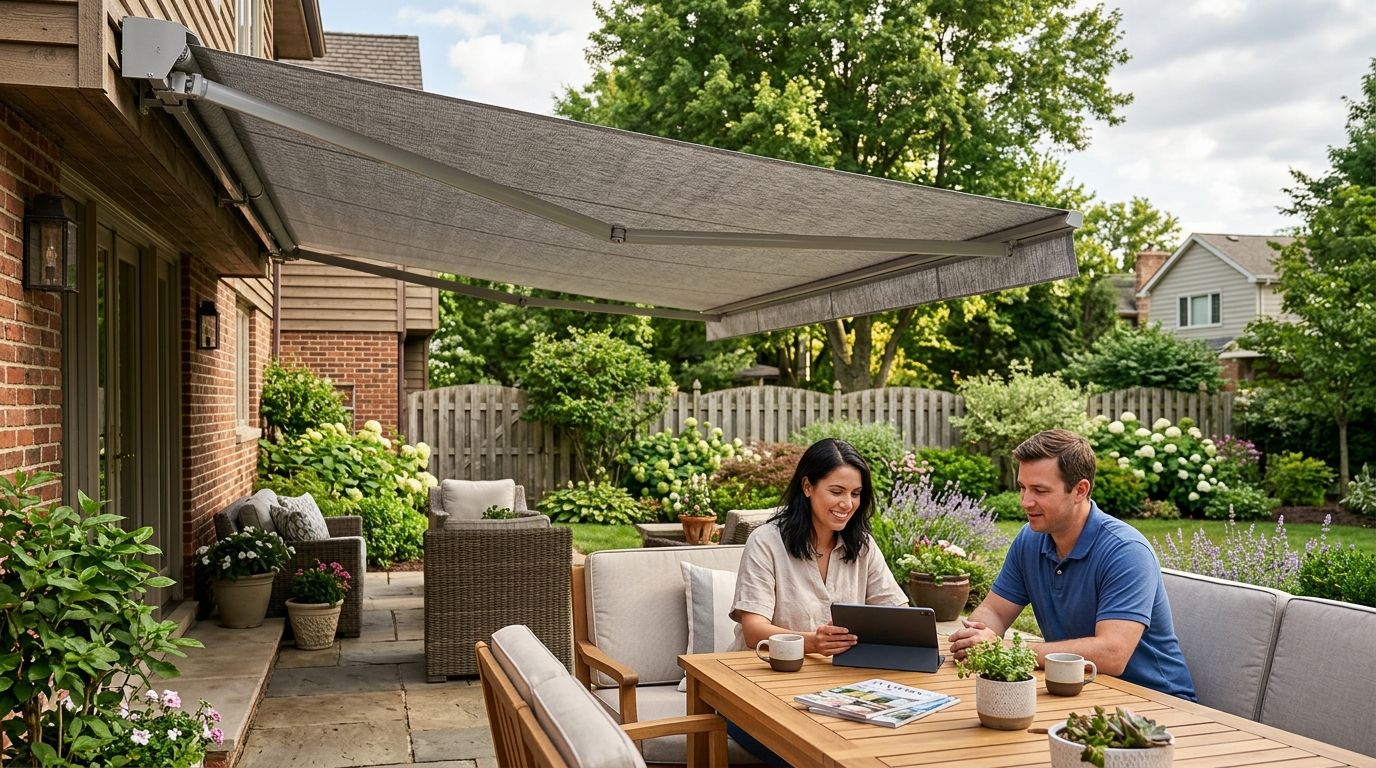
South Florida homeowners shopping for a retractable awning or aluminum patio cover research for weeks before they call. They compare motorized versus manual operation, check wind ratings against Miami-Dade County's Notice of Acceptance requirements, and price screen enclosures against solid covers. That research window is where Roxfire sees the biggest gap: most awning companies run the same generic home-improvement campaign a fencing contractor or garage door installer would run, and it shows up as wasted spend on searches for awning repair, awning cleaning, and DIY awning kits.
Demand also spikes on a calendar, not evenly across the year. Hurricane season runs June 1 through November 30, and homeowners who want a wind-rated patio cover installed before storm season crowd their calls into February through May. That seasonal pattern mirrors what shows up in hurricane-rated product marketing for impact window and shutter companies, where demand is tied to the same June 1 deadline. A campaign built for a steady, flat drip of leads misses that window entirely.
How to build a marketing plan for an awning and patio cover company
Optimize your Google Business Profile for awning-specific searches
Most awning companies default to a single generic category and stock photography, which buries them under fencing, roofing, and general contractor listings in the map pack.
- Add every relevant category: awning supplier, patio enclosure supplier, canopy and tent supplier
- Replace stock renders with photos of finished installs, shot straight-on and at an angle
- Post monthly updates timed to hurricane prep season (February–May)
- Request a Google review within 24 hours of the final walkthrough, while the install is still fresh
Build a dedicated page for every product line you install
A single "our services" page can't rank for both "motorized retractable awning" and "aluminum patio cover" searches — those are different buyer intents with different price points.
- Retractable and motorized awnings
- Fixed aluminum patio covers
- Screen and lanai enclosures
- Pergolas and cabanas
- Commercial storefront awnings, if you install them
Run Google Ads on buyer-intent keywords, not category terms
Bidding on the single word "awnings" burns budget on repair, cleaning, and DIY searches that will never book a $8,000–$15,000 install.
- Bid phrase and exact match on terms like "motorized awning installation [city]"
- Add negative keywords for repair, parts, and cleaning if you don't offer those services
- Split ad groups by product line so ad copy matches the landing page
- Use call and location extensions, since a homeowner comparing three quotes calls the first result that looks local
Pruning a negative keyword list every week and rewriting ad copy per product line is the part most owners stop doing after month two. Roxfire runs that audit on a recurring basis for South Florida trade businesses, which is the difference between a campaign that bleeds spend on "awning repair near me" and one that doesn't.
Use before-and-after photos in Meta Ads, not manufacturer renders
Manufacturer stock renders look identical across every competitor's ad account. Real jobsite photos don't.
- Run carousel ads showing the same patio before and after the install
- Cut a short video of a motorized awning retracting on command
- Retarget site visitors who viewed a pricing or gallery page but didn't submit a form
- Build a lookalike audience from your closed-won CRM list, not your full lead list
Systematize review generation after every install
Companies sitting under 25 Google reviews lose the map pack to competitors with 80 or more, even when the install quality is identical.
- Send the review request the same day as the final walkthrough, not a week later
- Give install crews a small incentive tied to 5-star reviews with photos attached
- Respond to every review, good or bad, within 48 hours
- Use the same 5-star review generation framework that works across other home service categories — the mechanics don't change by trade
Track speed-to-lead and follow-up in a CRM
A homeowner requesting a quote for a $10,000 patio cover is comparing three companies at once. Whoever calls back first usually wins the walkthrough.
- Call new leads within 5 minutes during business hours
- Set up automated text follow-up for any missed call
- Tag leads by product type so reps quote the right price range immediately
- Route commercial storefront awning leads to a separate pipeline from residential
Season your ad spend around hurricane prep months
- Increase budget February through May, ahead of the June 1 hurricane season start
- Lead ad copy with wind-rating and Miami-Dade NOA language during that window
- Shift messaging toward aesthetics and shade once storm-prep bookings taper
- Pause low-intent keyword groups once your install calendar books out 6-8 weeks
Comparison: how South Florida awning companies get marketing done
| Option | Best for | Key limitation | Verdict |
|---|---|---|---|
| In-house DIY Google Ads | Owners with a few hours a week and basic ad platform comfort | No niche negative-keyword library, budget leaks to repair and DIY searches | Hold |
| General digital marketing agency | Companies wanting one vendor across many unrelated services | Doesn't know wind-rating messaging or awning-specific search intent | Skip for this niche |
| Roxfire | South Florida awning and patio cover companies wanting product-line-specific campaigns | Needs a real ad budget committed before full-funnel data shows up | Buy |
Common mistakes awning and patio cover companies make
- Bidding on broad "awnings" instead of intent-specific terms — pays for repair and DIY traffic that never converts
- Skipping wind-rating and Miami-Dade NOA language in ad copy — buyers in flood and wind zones filter on this before price
- Slow follow-up on quote requests — a homeowner comparing three quotes books the fastest callback, not the best price
- Reusing manufacturer stock photography — the same renders pool builders and artificial turf installers already run for their own categories
- No structured review system — sitting under 25 reviews while a competitor with worse install quality sits at 80+
Get a marketing plan built for your niche
Google Ads, local SEO, and review systems for South Florida trade businesses.
FAQ
What's the best way to market an awning and patio cover company in 2026?
The best way is buyer-intent Google Ads split by product line, paired with a Google Business Profile built around real install photos and a steady review system. Manufacturer renders and single-word awnings keyword bidding waste most of the budget in this category.
How much does Google Ads cost for an awning company?
Cost depends on local competition and keyword mix, so a flat number misleads more than it helps. What matters more is whether negative keywords get pruned weekly so spend doesn't bleed into repair and DIY searches.
Is SEO or Google Ads better for awning companies?
Google Ads produces leads faster because awning searches carry lower volume than roofing or HVAC, so organic rankings take longer to build meaningful traffic. Local SEO still matters for the Google Business Profile and map pack, which is often where the first click happens.
When should awning companies increase ad spend?
Increase spend February through May, ahead of the June 1 start of hurricane season, when homeowners want wind-rated covers installed before storms hit. Spend can shift toward aesthetic and shade messaging once the pre-season rush books out.
Do awning companies need a different marketing approach than roofers or HVAC companies?
Yes — awning buyers compare style and wind rating over multiple weeks instead of calling for emergency repair, so the funnel is longer and more photo-driven. Keyword strategy, ad creative, and even review timing need to reflect that slower, higher-consideration purchase.
How many Google reviews does an awning company need to compete in the map pack?
Competitive markets often show map pack leaders sitting at 80 or more reviews, so a company under 25 reviews is usually invisible regardless of install quality. A same-day review request after the final walkthrough closes that gap faster than any other single tactic.
What is Miami-Dade NOA and why does it matter for awning ad copy?
Miami-Dade's Notice of Acceptance is the wind-load certification homeowners in high-wind zones check before buying a patio cover or awning. Ad copy and landing pages that mention it filter in serious, code-aware buyers before the phone call.
Should awning companies run Meta Ads or just Google Ads?
Both channels do different jobs — Google Ads catches buyers actively searching, while Meta Ads with before-and-after photos build awareness and retarget people who visited but didn't submit a form. Cutting Meta entirely usually shrinks the top of the funnel more than it saves in budget.
One last thing
Google is phasing out call-only ad formats in 2026, and that matters more for awning companies than most home service categories. A buyer comparing a $12,000 patio cover isn't calling off a single ad — they're clicking through to a gallery page first. Build the landing page before you build the campaign around it, not after.