Security system installer leads come from local search, referral triggers, and retargeting aimed at homeowners already comparing monitoring plans — not from generic form-fill traffic. This segment runs on a longer consideration cycle than most trades: homeowners research monitoring contracts, background-check policies, and camera privacy before they call anyone, and they're often choosing between you and national brands like ADT, Vivint, or SimpliSafe with far bigger ad budgets.
The installers who win security system installer leads in 2026 aren't the ones bidding highest — they're the ones who prove trust faster than the national brands can.
- Security system installer leads convert on trust signals — licensing, background-checked techs, monitoring partners — before price ever matters.
- Competing against ADT and Vivint on brand-name keywords wastes budget; local install and monitoring-specific terms convert better.
- Speed-to-lead matters more here than in most trades because homeowners are calling 2-3 installers within the same hour.
- Cost per booked install, not cost per form fill, is the number that tells you if a campaign is working.
- Google Business Profile category and license display fix more lead quality problems in 2026 than most paid campaigns.
Why lead generation matters for smart home and security installers
Homeowners shopping for a security system aren't shopping like they shop for a plumber. They're evaluating a recurring monitoring bill, camera footage privacy, and who has physical access to their home — that's a different buying psychology than "my AC broke, fix it today."
That changes what converts. A generic "call now for a free quote" ad that works for a garage door repair falls flat here because it skips the trust question entirely. Security system installer leads respond to specifics: is the technician background-checked, is the company licensed for low-voltage or alarm work in your state, does the monitoring center answer 24/7.
The other pressure is competitive: national brands own a huge share of branded search and run television and streaming ad budgets no local installer can match dollar for dollar. The path to volume isn't outbidding them on "home security system" — it's owning the local, install-specific, and smart-home-specific searches they don't bother targeting well.
Audit your local search visibility before you spend on ads
Before any ad dollar goes out, know where you actually stand in local search. Most installers skip this and pay for clicks they could have earned for free.
- Confirm your Google Business Profile category reads "Security system installer" or "Home security service" — not a generic "Electrician" or "Contractor" catch-all.
- Search your own city plus "smart home installer" and "security camera installation" from an incognito browser to see what actually ranks.
- Check that business name, address, phone number, and license number match across every directory listing.
- Pull your current review count and star rating against the three closest local competitors.
- Look for missing service pages — camera installation, smart lock install, and monitoring setup each deserve their own page, not one blended "security services" page.
Build trust signals into every page and ad
Once you know where you rank, close the trust gap before you scale traffic to those pages. This is where security and smart home installers differ most from a typical home service trade.
- Display license numbers and any background-check policy for technicians directly on service pages, not buried in an about page.
- Name your monitoring partner if you resell a monitoring service — homeowners search for that brand specifically.
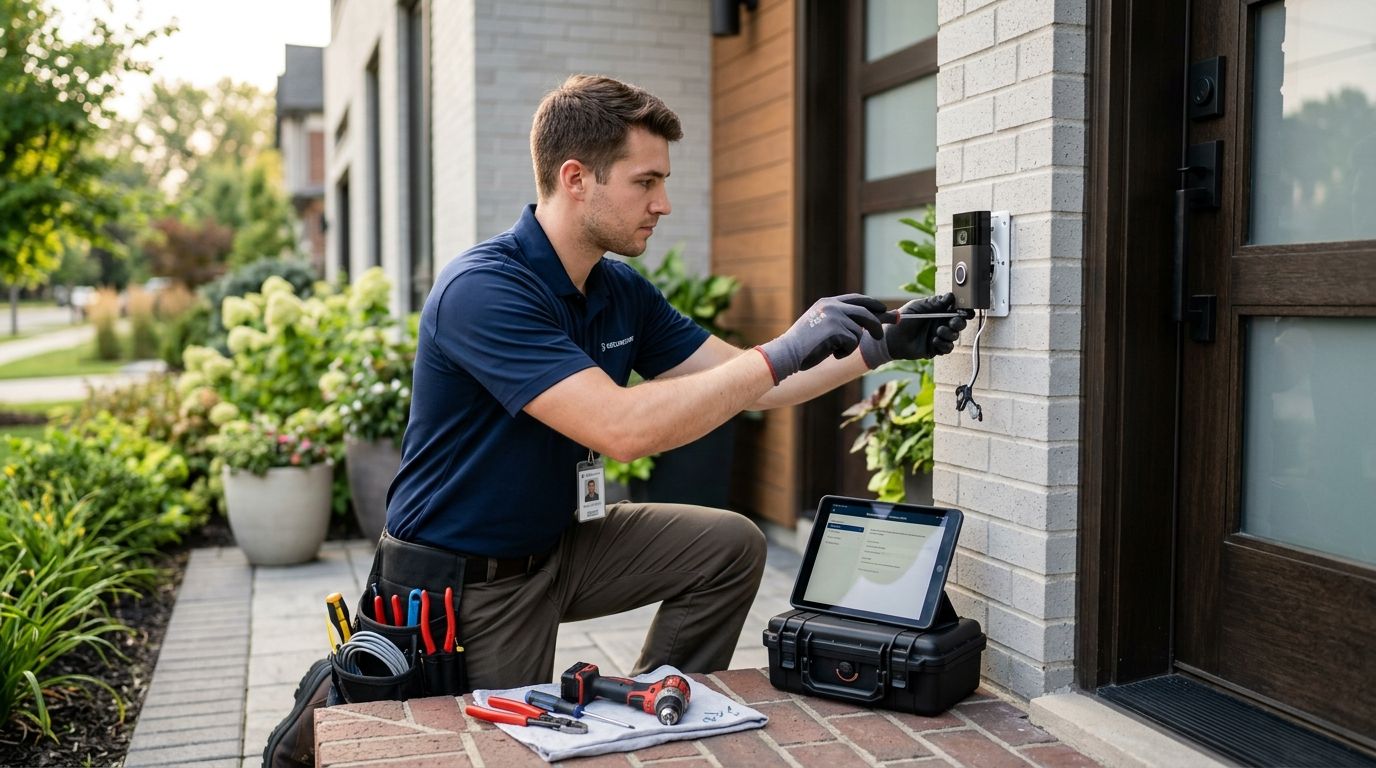
- Add before/after camera and panel install photos instead of stock security imagery.
- State insurance and bonding coverage in plain language near the quote form.
- Show a live review count badge above the fold, not just a logo in the footer.
Target the keywords homeowners actually type
Generic "home security" terms are dominated by national brand spend. The volume worth chasing sits in install-specific and smart-home-specific phrases — "security camera installation near me," "smart lock installer," "video doorbell install [city]." Roxfire builds keyword sets around install jobs and monitoring add-ons rather than the branded terms you can't win anyway, which is the same logic applied to adjacent install trades like generator installation lead generation.
- Build separate keyword groups for camera installation, alarm monitoring, smart lock, and video doorbell searches.
- Exclude branded competitor terms from your Google Ads campaigns unless you're running a deliberate comparison strategy.
- Layer in commercial-intent modifiers like "cost," "install," and "near me" over informational ones like "how does" or "is it worth it."
- Track which keyword groups produce booked installs, not just form fills, every 30 days.
Launch Local Services Ads and Google Ads campaigns for install jobs
Once the keyword map and trust pages are in place, paid search does the volume work. Local Services Ads put you in the top "Google Screened" slot for local searches, which matters a lot in a category where trust is the whole sale.
- Apply for Google Screened / Local Services Ads status if your license and background-check documentation qualify.
- Run a search campaign split by service line — install, monitoring add-on, camera-only — instead of one blended campaign.
- Set call tracking on every ad so you can separate booked installs from tire-kicker calls.
- Cap daily spend per campaign until cost per booked install is proven, not cost per click.
Retarget quote requests that stall
A homeowner who requests a quote and doesn't book within a week isn't gone — they're comparing you against two other installers and a monitoring contract's fine print.
- Build a retargeting list of anyone who visited a pricing or quote page but didn't convert.
- Serve a follow-up ad addressing the objection most likely stalling them: contract length, monthly monitoring fee, or install timeline.
- Email or text a reminder within 48 hours referencing the specific service they viewed.
- Retire leads from the active retarget pool after 30 days to avoid wasting spend on cold contacts.
Track cost per booked install, not cost per lead
A cheap lead that never books an install is worse than an expensive one that does. This is the metric most installers get wrong because it's easier to report on lead count than close rate.
- Tag every lead source in your CRM — organic, Local Services Ads, search ads, referral — so you can compare close rate by channel, not just volume.
- Calculate cost per booked install monthly, not per lead, and compare it against your average install ticket.
- Flag any channel with a close rate under half your average for a creative or targeting review before cutting spend.
- Review the ROI tracking approach used across home service accounts if you're not sure your current reporting separates leads from booked jobs.
Automate speed-to-lead follow-up
Security buyers call more than one installer in the same sitting. Whoever answers first, and answers with confidence, usually books the job.
- Route every form fill and missed call to a text auto-response within 60 seconds.
- Assign a single point of contact per lead instead of a shared inbox no one owns.
- Script the first call to lead with licensing and monitoring details, not price, since price isn't the first objection in this category.
- Log every call outcome in the CRM the same day so follow-up sequencing stays accurate.
Comparison of lead gen options for security and smart home installers
| Option | Best for | Key limitation |
|---|---|---|
| DIY Google Business Profile optimization | Installers with time to manage listings weekly | Slow to move ranking against national brand competitors |
| Self-managed Local Services Ads | Solo operators comfortable with Google Screened requirements | No dedicated keyword or budget optimization over time |
| General ad agency running generic trade campaigns | Installers who just need any local search coverage | Rarely separates install jobs from monitoring add-ons in targeting |
| Roxfire-managed lead generation for install trades | Installers ready to scale beyond word-of-mouth and referrals | Requires CRM and call tracking access to report accurately |
Common mistakes security and smart home installers make
- Competing on national brand keywords. Bidding on "ADT" or "Vivint" without a direct comparison strategy burns budget against companies with far larger ad accounts.
- Treating a security lead like an HVAC lead. Skipping trust content — licensing, background checks, monitoring partner — loses homeowners who are evaluating who gets physical access to their home.
- Slow follow-up on a high-consideration purchase. A lead that sits for hours, not minutes, is already talking to a competitor.
- Ignoring the monitoring upsell in ad copy. Ads that sell the install only, with no mention of ongoing monitoring, undersell the full account value.
- Running one blended service page. Camera install, smart lock install, and full alarm monitoring searchers all land on the same generic page and bounce.
“If a security lead sits for more than five minutes without a callback, it's already calling the next installer on the list.”
Fill your install calendar in 2026
Talk to Roxfire about lead generation built for security and smart home install jobs.
FAQ
What's the best way to generate security system installer leads in 2026?
The best approach combines Local Services Ads for the Google Screened trust badge, service-specific search campaigns, and a Google Business Profile that clearly states licensing and background-check policy. National brand keywords are rarely worth bidding on directly.
How much do security system installer leads cost?
Cost varies by market and competition from national brands, and it depends heavily on how tightly your keyword targeting separates install jobs from generic security searches. Track cost per booked install rather than a flat cost-per-lead number to judge whether spend is working.
Is Local Services Ads better than Google Search Ads for security installers?
Local Services Ads works well because the Google Screened badge answers the trust question upfront, which matters more in this category than most trades. Search Ads still matter for smart-home and camera-specific terms Local Services Ads doesn't cover as deeply.
How long does it take to see results from security installer lead generation?
Paid search can produce booked calls within the first few weeks once campaigns are split by service line. Organic and Google Business Profile improvements typically take longer to show ranking movement, often a few months.
Do smart home installers need SEO or just paid ads?
Both, because paid ads compete directly against national brand budgets while organic and Google Business Profile visibility capture homeowners doing comparison research before they're ready to call. Relying on paid alone means paying for traffic you could earn for free.
How does Roxfire generate leads for security and smart home installers?
Roxfire builds install-specific keyword sets, structures trust signals into landing pages, and tracks cost per booked install rather than raw lead count. The same framework applies across install-heavy trades like generator and EV charger installation.
What makes a security system installer lead high quality versus low quality?
A high-quality lead comes from someone actively comparing install quotes or monitoring plans, not someone researching DIY camera systems. Call tracking and CRM tagging by source are how you separate the two after the fact.
Should security installers advertise on Meta or Facebook?
Meta ads work best for retargeting homeowners who visited a quote page but didn't book, since security purchases involve comparison shopping over several days. It's a weaker channel for first-touch demand compared to Google Search or Local Services Ads.
One last thing
The fastest fix most security and smart home installers skip in 2026 isn't a new campaign — it's the Google Business Profile category. Installers filed under "Electrician" or "Contractor" instead of "Security system installer" lose ranking for the exact searches that convert best, and it costs nothing to correct.