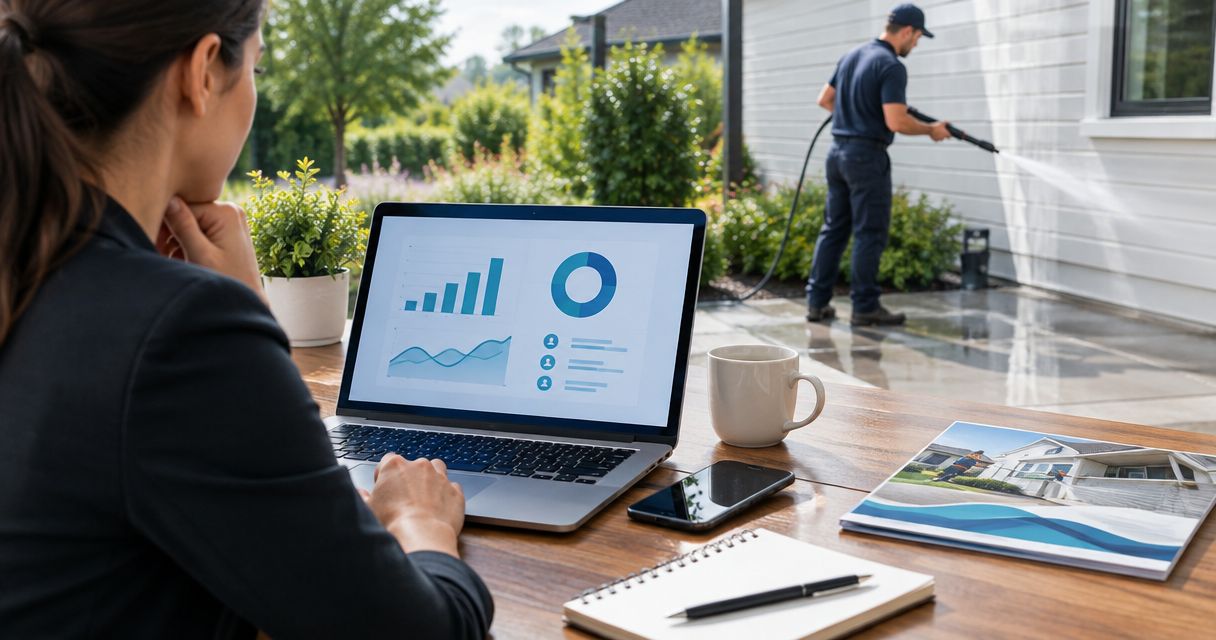

Commercial roofing marketing is the set of campaigns, pages, and lead-routing systems built to reach facility managers, property managers, and general contractors instead of homeowners hunting for a storm-damage estimate. Flat roof and TPO/EPDM contractors sell a different buyer with a different budget cycle, and the funnel that works for a residential reroof rarely converts a commercial account.
- Commercial roofing marketing needs separate pages, ads, and keywords from residential storm campaigns.
- Facility managers and GCs search differently than homeowners: 'TPO roofing contractor commercial', not 'roof leak near me'.
- Google Local Services Ads are built around residential trades, so commercial pipeline leans on SEO and Search campaigns.
- Roxfire runs commercial roofing marketing alongside residential storm campaigns for South Florida contractors.
- In 2026, commercial buyers still vet contractors through Google Business Profile and case studies before requesting a bid.
Why this matters for flat roof and commercial roofing companies
A homeowner calls after a storm. A property manager runs a bid process, checks references, and loops in a board or ownership group before signing. That difference changes everything about how commercial roofing marketing should be built, the same way B2B commercial HVAC accounts need different targeting than residential service calls.
Most commercial roofers still run one website and one Google Ads account for both audiences. The result: a homeowner-facing page with storm damage photos ranks for "flat roof replacement commercial" and loses the click to a competitor with a page built for the actual buyer. Fixing that split is the highest-leverage move in this guide.
Verdict: commercial roofing companies that separate their commercial funnel from residential storm campaigns win more RFPs in 2026 without spending more on ads.
Separate your commercial and residential funnels
Before touching ad spend, split the two buyer journeys on your site, your ad account, and your phone lines.
- Create a dedicated commercial roofing page distinct from your residential reroof page
- Use different call tracking numbers for commercial and residential inquiries so you can see close rates by segment
- Build separate Google Ads campaigns with separate budgets
- Write separate ad copy: "licensed commercial roofing contractor" reads differently than "free storm damage inspection"
- Keep a named list of the building types you actually service: retail strip centers, warehouses, HOAs, multifamily
Build a website page that speaks to facility managers
A facility manager wants proof you can handle scope, timeline, and liability. Before-and-after storm photos do not answer any of that.
- List roofing systems by name: TPO, EPDM, modified bitumen, built-up roofing, roof coatings
- Put certifications, manufacturer partnerships, and insurance and bonding details high on the page
- Add a project management section: crew size, safety protocols, and how you work on occupied buildings
- Include a bid-request form separate from your homeowner quote form
- Roxfire's roofing website design work is built around exactly this split, with different pages and different calls to action per audience
Target the search terms commercial buyers actually use
Homeowners search "roof leak repair". Property managers do not. Your keyword list should reflect the gap.
- "Commercial flat roof replacement [city]"
- "TPO roofing contractor commercial"
- "Built-up roof repair for warehouses"
- "Roof coating for commercial buildings"
- "Commercial roofing RFP" and "commercial roof bid"
- "Preventive roof maintenance contract" for facilities that budget annually
Run Google Ads built for commercial intent
Search ads still produce commercial roofing pipeline in 2026, but only when the account structure matches the buyer.
- Give commercial keywords their own campaign and budget so storm-driven residential searches do not eat the spend
- Write copy around scope, systems, and certifications instead of urgency and discounts
- Route call extensions to a commercial-specific line
- Add negatives for residential intent: "emergency", "insurance claim", "near me" variants that skew homeowner
- Roxfire's breakdown of Google Ads copy that converts for roofing covers headline and description structure that holds up across both intents
One platform note worth stating plainly: Google Local Services Ads are built primarily around residential home service trades. Commercial roofing is generally not a fit there the way HVAC or plumbing service calls are, so SEO and standard Search carry more of the commercial pipeline than they would for a residential-only contractor.
Build a commercial roofing marketing plan
Find out where your ads, site, and lead routing lose commercial deals.
Build local SEO around building types and service area
Commercial roofing SEO rewards specificity that residential SEO can skip.
- Publish service pages by building type: retail, industrial, multifamily, HOA and condo
- Get listed in commercial property management directories and local trade associations
- Build citations that reference commercial licensing and bonding, not just review counts
- Earn links from property management firms, GCs, and associations you have worked with
Generate references and case studies from the right people
A five-star Google review from a homeowner does not move a property manager evaluating a full flat roof replacement on a 40,000 square foot building.
- Ask GCs and property managers for a written reference at project close, not just a star rating
- Build one-page case studies with square footage, roof system used, and timeline
- Feature repeat commercial clients by name, with permission, on the commercial page
- Roxfire's playbook on generating 5-star reviews works here too, aimed at commercial contacts instead of homeowners
Set up lead routing for a longer sales cycle
Commercial reroof decisions commonly run 60 to 90 days from first walkthrough to signed contract, longer when a board approves capital spend. A homeowner-style follow-up that stops after two days kills these deals.
- Route commercial leads into a CRM pipeline separate from residential jobs
- Build a nurture sequence spaced across weeks, not hours
- Assign one point of contact per commercial lead so the relationship stays consistent through the bid
- Log every touchpoint from first inquiry to signed contract so you can see where deals stall
Track ROI past cost-per-lead
A $150 commercial lead that closes into a six-figure reroof beats a $40 residential lead that closes into a small repair. CPL alone hides that entirely.
- Track close rate and average contract value by source, not lead volume
- Report commercial and residential separately so one never masks the other
- Review pipeline monthly against signed contracts, not form fills
Comparison: marketing options for commercial roofing companies
| Option | Best for | Key limitation |
|---|---|---|
| In-house marketing, no agency | Contractors with a full-time marketing hire and strong GC relationships | Slow to test channels; competes with the owner's time on active jobs |
| Referral-only growth | Small crews leaning on existing property manager and GC relationships | Growth caps at the size of the existing network |
| Generic home-service agency | Companies wanting one vendor across HVAC, roofing, and plumbing | Campaigns usually built for homeowner storm leads, not RFP-driven buyers |
| Roxfire commercial roofing marketing | Flat roof and commercial roofers who need both storm-driven residential volume and B2B accounts | Needs call tracking and CRM in place before close-rate ROI is visible |
Verdict: a generic home-service agency can run your storm campaigns, but commercial roofing marketing needs separate funnels for the two buyers, or the commercial side quietly loses.
Common mistakes commercial roofing companies make
- Running one website and one ad account for homeowner storm leads and commercial RFPs, so neither converts well
- Skipping case studies and certifications, leaving property managers nothing to vet before a bid
- Dropping commercial leads into the same follow-up sequence as a same-day repair, so a 60 to 90 day cycle goes cold by week two
- Bidding only on "roof repair" and "roof replacement" while ignoring "TPO roofing contractor" and "commercial flat roof replacement"
- Reporting cost-per-lead without close rate, which hides how much more a commercial deal is worth
FAQ
What is commercial roofing marketing?
Commercial roofing marketing is the mix of SEO, Google Ads, local search, and lead routing built to reach facility managers, property managers, and general contractors rather than homeowners. It differs from residential roofing marketing in keywords, sales cycle length, and follow-up cadence.
Do Google Local Services Ads work for commercial roofing?
Local Services Ads are built primarily around residential home service trades, so commercial roofing is generally not a strong fit. Standard Google Search campaigns and organic SEO carry more of the commercial pipeline instead.
How long is the sales cycle for commercial roofing leads?
Commercial reroof decisions commonly take 60 to 90 days from first walkthrough to signed contract, longer when board or ownership approval is required. Nurture sequences need to span weeks, not days, to match that timeline.
Should commercial and residential roofing share one website page?
No. Facility managers respond to certifications, project management detail, and case studies, while homeowners respond to storm urgency. Separate pages convert both audiences better than one generic page.
What keywords matter most for commercial roofing SEO?
Terms like commercial flat roof replacement, TPO roofing contractor commercial, built-up roof repair, and commercial roof maintenance contract reflect how facility managers search. Homeowner terms like roof leak repair near me pull the wrong traffic.
How long does a commercial flat roof last?
TPO and EPDM systems typically last 20 to 30 years with proper maintenance. That is why property managers budget replacement on a capital cycle rather than reacting to a single leak, and why maintenance-contract keywords convert.
Is B2B commercial roofing marketing different from residential?
Yes. B2B targets property managers and GCs who run bid processes and need proof of scope, insurance, and past commercial work, while residential targets homeowners reacting to a leak with faster decisions.
Can one agency handle both commercial and residential roofing marketing?
Yes, if the agency builds separate campaigns, pages, and reporting for each audience. Running both through one generic funnel is what causes commercial leads to underperform in 2026.
One last thing
Most commercial roofing companies that feel stuck in 2026 do not have a volume problem, they have a mismatch problem. Residential storm campaigns generate calls fine, but those same campaigns rarely surface a facility manager scoping a 20,000 square foot TPO reroof, and the two get reported in one line item that hides the gap. Split the reporting before you spend another dollar on ads and the real problem usually shows up within 30 days.