

Home service business retargeting is paid follow-up advertising aimed at turning an interested homeowner who did not convert into a booked job. In 2026, effective retargeting ads use the abandoned action, service type, sales stage, and urgency to determine who sees each message; the same segmentation principle applies to channel-specific campaigns such as Meta ads for roofing companies.
- Retargeting ads home services need separate audiences for missed calls, abandoned forms, and unbooked estimates.
- Google Display suits continued research; Meta suits visual proof and objection-focused follow-up.
- Start with short testing windows, then adjust them using actual days-to-book data from your CRM.
- Measure booked jobs and qualified opportunities, not clicks, impressions, or cheap form fills.
Why retargeting matters for home service businesses
Home service leads do not follow one clean conversion path. A homeowner can call while a technician is unavailable, open a form without submitting it, request an estimate and stop responding, or return to the same service page while comparing contractors. Those actions show different levels of intent and require different follow-up.
Retargeting matters because the first visit or conversation often leaves an unresolved question. The homeowner may need proof that you handle the exact job, confirmation that you serve the property location, clearer next steps, or a reason to resume an estimate. A generic brand reminder does not answer any of those questions.
In 2026, the correct setup connects advertising data with call tracking, form submissions, appointment status, and CRM stages. The ad platform identifies who returned or engaged; the CRM identifies who became qualified, booked, lost, or disqualified. Without both sides, the campaign keeps paying to reach people who no longer need follow-up.
How to build retargeting ads for home services
The manual route starts with a spreadsheet, website event data, call records, and CRM exports. Automation becomes useful after the underlying audience rules are clear. Automating a vague audience only spreads bad targeting faster.
Map every non-converting action
Define what did not convert before building an audience. A missed call is not the same as a completed estimate that never became a job, and a service-page visit is weaker than either one.
Use website and phone records to create an event map. If calls are a major source of leads, establish call tracking for home service campaigns before attributing retargeting results.
- Record service-page visits without a form submission
- Record form starts that do not produce a completed lead
- Separate missed calls from answered calls
- Mark estimates that remain open without a booked job
- Identify leads that never responded after the first contact attempt
- Exclude spam, vendors, job applicants, and out-of-area inquiries
Separate audiences by intent and service
Do not put every website visitor into one audience. Someone reading an informational article has weaker commercial intent than someone who opened an estimate form or called from a service page.
Service type matters too. Emergency repair, scheduled maintenance, and replacement projects have different decision patterns. Build the smallest useful number of audiences rather than dozens of lists that never collect enough activity to run consistently.
- Group high-intent visitors who reached estimate or booking pages
- Create a separate audience for missed and unanswered calls
- Split repair leads from replacement or installation leads
- Separate residential leads from commercial inquiries when both are served
- Divide service areas only when location changes availability or messaging
- Keep general content visitors out of high-intent campaigns
Set timing windows from your sales data
Retargeting windows should follow the time between first inquiry and booked job. Start with controlled windows, compare results, and replace assumptions with CRM evidence.
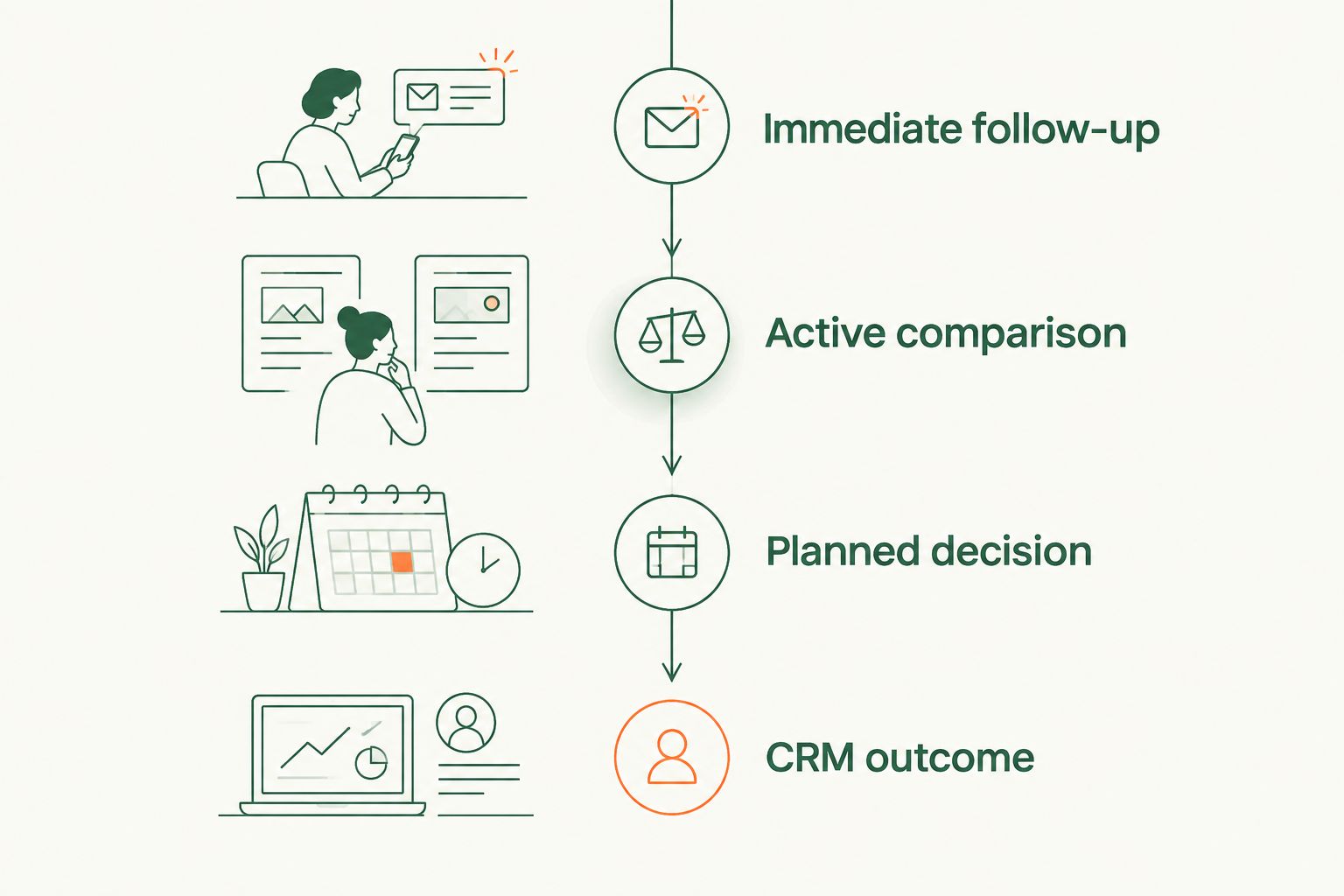
A practical 2026 test can compare an immediate window covering the first 3 days, a second window covering days 4 through 14, and a longer window for planned projects. These are testing groups, not universal benchmarks. Your actual booking data decides which windows stay active.
- Test shorter windows for urgent repair inquiries
- Test longer windows for installations and planned replacements
- Compare days-to-book by service line instead of using one account-wide setting
- Reduce frequency when the same audience sees repeated creative without responding
- End advertising when the lead books, opts out, or becomes disqualified
Match the message to the unresolved objection
Retargeting creative should answer the question that blocked the next step. Repeating the original acquisition ad gives the homeowner no new reason to respond.
Use the page visited, call outcome, form status, and CRM note to choose the message. Fix the landing experience as well; sending people back to the same weak page will reproduce the same abandonment. This contractor website conversion guide covers the page-level issues that ads alone cannot solve.
- Show the exact service the homeowner previously viewed
- Send missed callers to a direct scheduling or contact action
- Use project evidence relevant to the service instead of generic stock images
- Answer one common objection per ad rather than listing every benefit
- Keep one primary action on the destination page
- Remove claims that the landing page cannot support with evidence
Connect ad platforms to CRM stages
Manual audience uploads work when lead volume is manageable. Export the required CRM stages, remove converted and disqualified records, and upload the remaining audience using each platform's accepted process.
Automation becomes the faster path when frequent exports create stale lists. Roxfire's home service retargeting management can connect Google Ads, Meta Ads, landing pages, and CRM automation around defined lead stages. The trade-off is that the business still needs accurate CRM statuses; no integration can correct a lead that the team never marked as booked or lost.
- Document which CRM stages enter each audience
- Sync only contact data collected with the required permissions
- Remove booked, lost, and disqualified leads from acquisition follow-up
- Separate contacted leads from leads the team never reached
- Test Google and Meta as distinct channels instead of combining their reporting
- Audit automated rules after any CRM pipeline change
Exclude people who should not see the ads
Exclusions protect budget and prevent awkward customer experiences. A homeowner who already booked should not keep seeing an ad asking them to request the same estimate.
Some past customers may belong in a separate maintenance or related-service campaign, but that is not retargeting for an unconverted lead. Keep customer marketing and lead recovery as separate programs with separate goals.
- Exclude completed and booked jobs
- Exclude leads marked out of area or outside the services offered
- Exclude duplicate records across forms, calls, and chat
- Exclude employees, vendors, and known spam submissions
- Respect advertising opt-outs and communication consent records
- Review suppression lists before every manual upload
Measure qualified opportunities and booked jobs
Clicks tell you that an ad attracted attention. They do not tell you whether the person needed the service, scheduled an estimate, or produced revenue.
In 2026, retargeting reports should connect campaign, audience, service, lead status, and final outcome. Compare each segment against its own spend and booking results. Do not let strong engagement metrics hide a segment producing unqualified inquiries.
- Track qualified leads by audience and service line
- Track scheduled appointments or estimates
- Track booked jobs when the CRM records them
- Compare cost per qualified opportunity across channels
- Review lead notes for recurring objections that creative should address
- Pause segments that spend without producing qualified movement
- Keep acquisition and retargeting results in separate reporting views
Retargeting options for home service businesses
No single option covers every non-converter. Google Display and Meta reach identifiable digital audiences, while CRM follow-up works with contact records already collected by the business. Managed execution coordinates those systems but still depends on accurate lead handling.
| Option | Best for | Main advantage | Key limitation |
|---|---|---|---|
| Google Display retargeting | Previous visitors continuing online research | Broad reach beyond the original website visit | Placements and creative need regular review |
| Meta retargeting | Visual services and objection-focused follow-up | Supports image and video formats across Meta placements | Small or fragmented audiences can restrict delivery |
| CRM email or SMS follow-up | Known leads with valid contact details and permission | Messages can follow the recorded sales stage | Bad or missing CRM statuses create irrelevant follow-up |
| Manual audience uploads | Businesses testing a simple campaign structure | Keeps initial setup under direct control | Lists become stale without a fixed update process |
| Managed setup through Roxfire | South Florida service businesses needing connected ads and CRM stages | Coordinates Google Ads, Meta Ads, landing pages, and automation | Requires clean CRM data and consistent pipeline updates |
Roxfire is best for home service businesses that need managed retargeting across paid ads and CRM stages; businesses with clean data and internal campaign capacity can run the same framework manually.
Recover more unbooked leads
Connect ad audiences to real lead stages instead of treating every visitor the same.
Common retargeting mistakes home service businesses make
Treating every visitor as a strong lead
A blog reader, repeat service-page visitor, missed caller, and unbooked estimate do not carry equal intent. One combined audience pushes weak traffic and qualified opportunities into the same budget, message, and report.
Leaving converted leads in the audience
This mistake inflates audience size while wasting impressions on customers who already booked. Suppression needs to happen whenever the CRM changes, not only when someone remembers to export a new list.
Repeating the original acquisition ad
The original ad earned the first visit but did not finish the conversion. Retargeting should add useful proof, address the likely objection, or provide a clearer next action rather than showing the same message again.
Measuring platform conversions without checking lead quality
An ad platform can count a submitted form while the CRM later shows spam, an unsupported service, or an out-of-area property. Reporting needs the final lead status before the team calls the campaign successful.
Ignoring the operational follow-up problem
Advertising cannot fix unanswered phones, delayed callbacks, or estimates that receive no follow-up. Before increasing the 2026 retargeting budget, verify that the team can respond, update the CRM, and move qualified leads through the pipeline.
FAQ
What are retargeting ads for home services?
Retargeting ads for home services reach people who previously visited, called, submitted information, or received an estimate without booking. The campaign uses that earlier interaction to deliver a more relevant follow-up message.
How soon should a home service company start retargeting a lead?
Start testing retargeting immediately after a defined non-converting action, then segment later messages by elapsed time. Use CRM days-to-book data to decide whether each service needs a short or extended window.
Is Google Display or Meta better for home service retargeting?
Google Display is better for broad follow-up during continued online research, while Meta is better for visual proof and service-specific creative. Running separate tests shows which channel produces qualified opportunities for each service line.
Can a contractor retarget people who made missed calls?
Yes, if the call-tracking and advertising setup can create an eligible audience using properly collected data. Missed callers should receive different messaging from website visitors because they already attempted direct contact.
Should retargeting stop after a homeowner books?
Yes, lead-recovery retargeting should stop after the homeowner books. Existing customers can enter a separate campaign for relevant services, but they should not keep receiving ads asking them to request the completed estimate.
How should home service businesses measure retargeting in 2026?
Measure qualified opportunities, scheduled estimates, and booked jobs by audience and service line in 2026. Clicks and impressions help diagnose delivery, but they do not prove that the campaign generated business.
Can a small contractor run retargeting without an agency?
Yes, a small contractor can use website events, CRM exports, exclusion lists, Google Ads, and Meta Ads manually. Managed support becomes useful when list maintenance, attribution, and cross-channel reporting exceed the team's available time.
One last thing
Fix CRM status discipline before adding more retargeting creative in 2026. If booked jobs remain marked as open leads, the campaign wastes spend and the report overstates the recoverable audience. Assign one owner to update lead outcomes, define the accepted statuses, and audit a sample of records every 7 days. Better audience data improves every channel without requiring another ad variation.


