
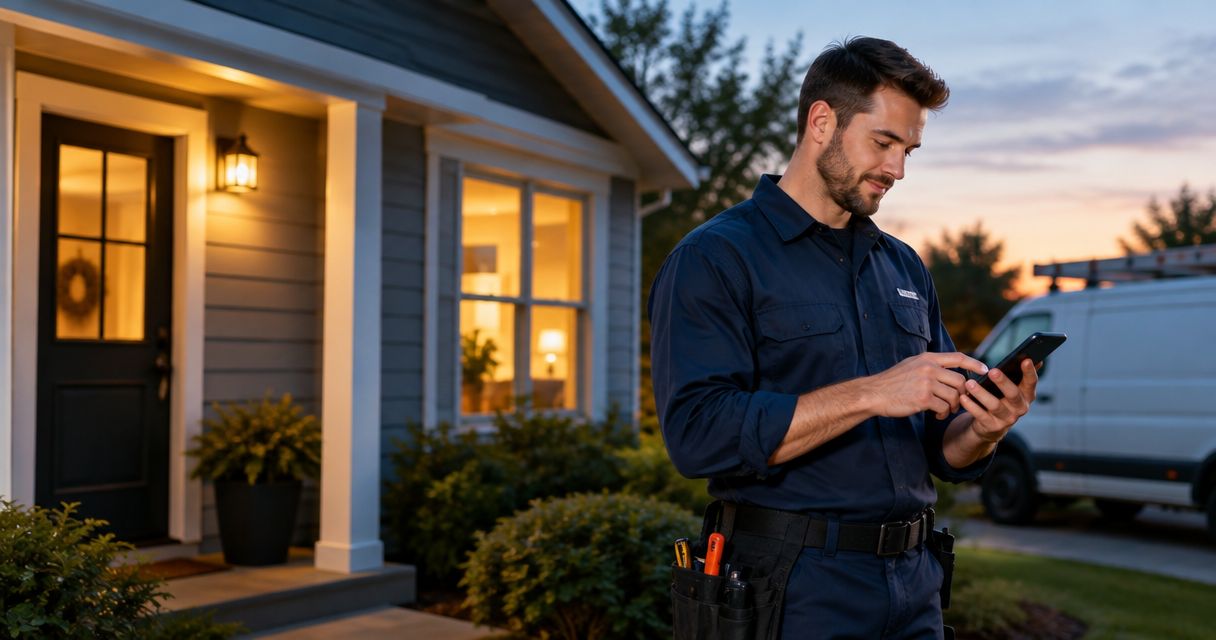
After-hours leads for home service businesses are the calls, texts, and form fills that show up between roughly 6 PM and 8 AM, when most HVAC, roofing, plumbing, and restoration offices have already gone home. Capturing them in 2026 means building an automated response layer — not paying someone to sit by a phone all night.
- After hours leads home services need automated capture: missed-call text-back, an AI chatbot, or voicemail-to-CRM routing, not a night shift.
- A lead that waits past the first 5 minutes for a reply is dramatically less likely to book, whether it's 2 PM or 2 AM.
- AI chatbot lead capture and Local Services Ads messaging both work unattended and can qualify a job before your office opens at 8 AM.
- Roxfire builds after-hours capture into HVAC, roofing, and restoration campaigns across South Florida using call tracking and CRM automation.
Why this matters
Emergency home service demand doesn't run on business hours. A cracked water heater, a no-cool HVAC call in August, or storm damage after a South Florida squall all happen whenever they happen — and the homeowner is calling the first company that answers, not the one with the best truck wrap.
Every unanswered after-hours call is a lead handed to a competitor by default. In 2026, with Google pushing more searchers toward AI Overviews and Local Services Ads before they ever hit your website, the businesses winning after-hours jobs are the ones whose systems respond in minutes, not the ones with a bigger ad budget.
This isn't a staffing problem anymore. AI chatbot lead capture and missed-call automation now handle the first response so a human only steps in once the lead is qualified.
How to capture after-hours leads for home service businesses
There's no single tool that solves this — it's a stack, and which pieces you need depends on call volume and how urgent the average job is. Here's how the main options compare:
| Method | Best for | How it works | Limitation |
|---|---|---|---|
| Missed-call text-back | Solo operators and small crews | Auto-texts the caller within about a minute of a missed ring | Can't handle scheduling nuance or upsell questions |
| AI chatbot lead capture | Multi-location HVAC and roofing brands running paid traffic | Answers site visitors, qualifies the job type, books or routes to CRM | Needs regular tuning on scripts and seasonal offers |
| Local Services Ads messaging | Contractors already running Google LSAs | Lets searchers message directly from the ad without a phone call | Someone still has to monitor the inbox in real time |
| Live answering service | Restoration and plumbing companies with true emergencies | A person picks up around the clock and triages urgency | Cost scales with call volume; quality varies by vendor |
| Voicemail-to-CRM automation | Companies that already run a CRM | Transcribes overnight voicemails and drops them straight into the pipeline | Still passive — nobody is actually replying at 2 AM |
Verdict: the fastest fix for most home service businesses is missed-call text-back paired with an AI chatbot on the website — both run unattended, and neither requires a new hire. Live answering services earn their cost only when a meaningful share of your calls are genuine emergencies, like burst pipes or fire and water restoration.
Missed-call text-back: the fastest fix for solo and small crews
Missed-call text-back does exactly what it sounds like — the second a call rings through unanswered, the system fires an automatic text asking what the caller needs and when they're free. For a two-truck HVAC company, this alone recovers jobs that would otherwise go to voicemail purgatory.
It's cheap to set up and doesn't require touching your website. The tradeoff: it's reactive. If nobody follows up on the text thread within the first 5 minutes it generates, the lead cools the same way an unanswered call does.
Verdict: Buy for solo operators and two-to-five truck crews. It's the lowest-effort fix on this list and pays for itself on a single recovered job.
AI chatbot lead capture: books jobs while the office is closed
A chatbot on your service pages does more than answer FAQs — a well-built one asks the same triage questions your dispatcher would ask (what's broken, how urgent, what ZIP code) and either books a slot directly or hands a qualified lead to your CRM with all of that context attached. That's a meaningfully different lead than a bare name and phone number sitting in an inbox at 7 AM.
The catch is upkeep. Scripts go stale, seasonal promotions change, and a chatbot answering with last year's service list looks worse than no chatbot at all. It needs the same ongoing attention as a paid search campaign.
Verdict: Buy for multi-location HVAC, roofing, and restoration brands already spending on Google Ads or Meta Ads — it multiplies the value of traffic you're already paying for after the office closes.
Local Services Ads and live answering: the backup layers
Local Services Ads messaging lets a homeowner searching at 9 PM message your business straight from the ad instead of hanging up when nobody picks up. It's a strong complement to a chatbot but still depends on someone actually watching that inbox — set-and-forget doesn't apply here.
Live answering services are the right call when a real share of after-hours volume is genuinely urgent — think restoration companies fielding fire and water damage calls, or plumbing companies handling burst pipes. A human triaging severity in real time beats any bot for that use case, but the cost has to be weighed against call volume.
You can't manage what you can't see. Call tracking setup shows exactly which calls come in after 6 PM, which ones got answered, and which ones went straight to voicemail — without that data, you're guessing at which layer of the stack you actually need.
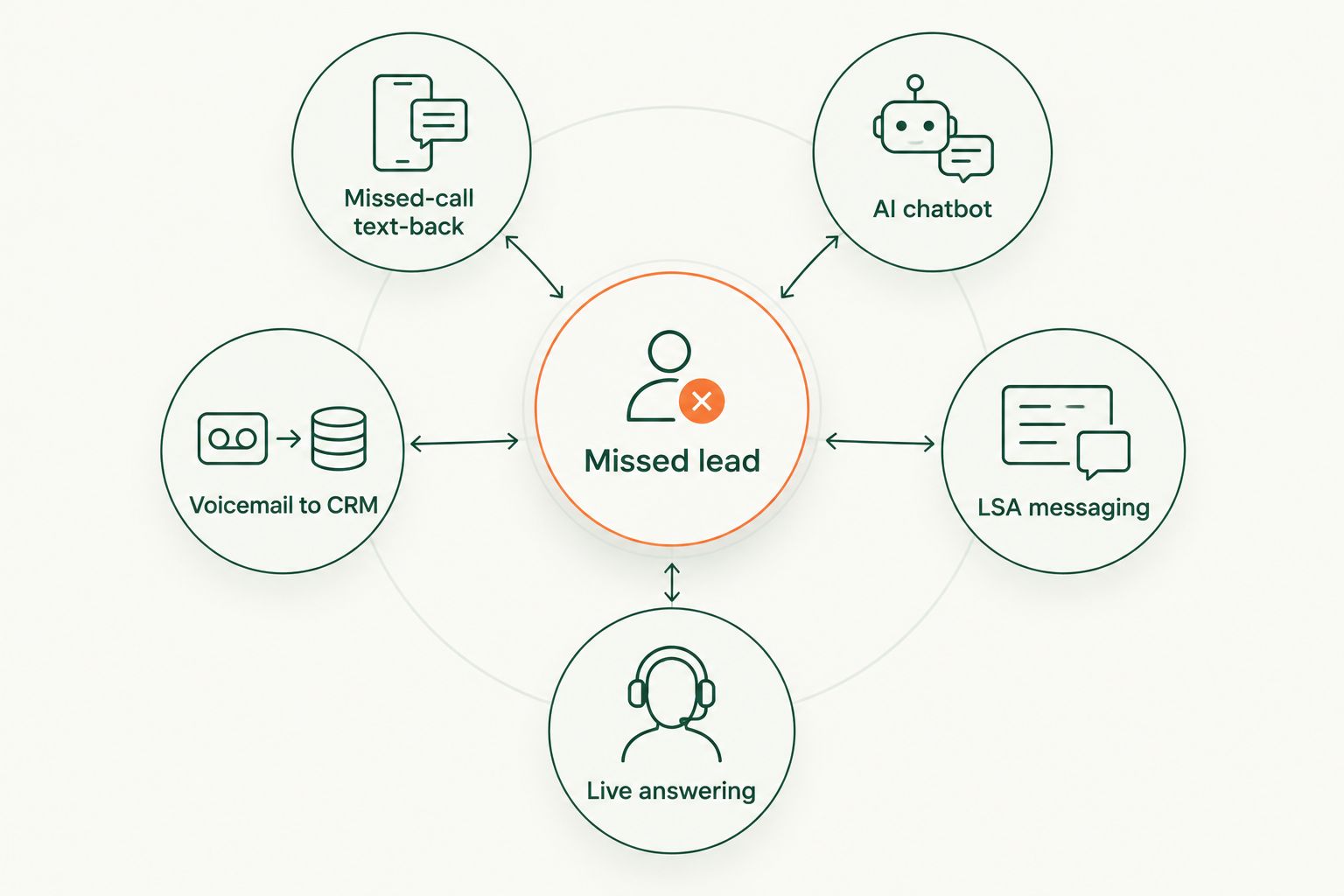
No single layer replaces the others — a missed-call text-back with no chatbot still misses website visitors, and a chatbot with no call tracking leaves you blind to what's happening on the phone lines.
“If a lead has to wait until 8 AM to hear back, they already called your competitor.”
Why after-hours leads slip through
Most contractors already suspect they're losing jobs overnight — the harder part is diagnosing exactly where. The usual culprits:
- No after-hours routing on the main phone line, so every call past close goes to a generic voicemail box
- Website contact forms with no auto-response, leaving a lead to assume nobody's checking
- Ad campaigns running 24/7 with no after-hours landing experience, so paid traffic hits a dead end at night
- No CRM tagging for lead time-of-day, so nobody can prove how much revenue after-hours leads are actually worth
- Chatbot or text-back scripts that haven't been updated for the current season's service demand
Fixing the routing problem is the cheap part. The bigger leak for a lot of companies is competing for the exact same daytime keywords everyone else bids on — see exclusive HVAC leads without bidding wars for the pricing side of that problem.
Fix after-hours lead capture
Roxfire builds call tracking, chatbot capture, and CRM routing for home service brands.
FAQ
What counts as an after-hours lead for home service businesses?
An after-hours lead is any call, text, form fill, or chat that arrives outside your posted business hours, typically between 6 PM and 8 AM. For most HVAC, roofing, and restoration companies these skew toward genuine emergencies rather than routine estimate requests.
How fast should you respond to a lead that comes in overnight?
Respond within 5 minutes of your office opening, or immediately via automation overnight. The odds of qualifying a lead drop sharply the longer a response is delayed, day or night.
Does missed-call text-back actually convert into booked jobs?
Yes, for companies that currently send every unanswered call to voicemail. It works by texting the caller within about a minute of the missed ring, which recovers leads that would otherwise go cold before your office opens.
Should HVAC and plumbing companies staff a live answering service at night?
Only if a meaningful share of after-hours calls are true emergencies, like a burst pipe or a no-cool HVAC call in peak summer. If most overnight volume is routine scheduling, a chatbot or text-back system covers it at lower cost.
Can AI chatbots book emergency service calls without a person on shift?
AI chatbot lead capture can qualify the job and grab contact details and urgency level without a person online, then route it to whoever's on call. It can't dispatch a technician on its own, so a human still closes the loop.
Do Local Services Ads work after business hours?
Local Services Ads messaging lets homeowners message a business directly from the ad at any hour, but the message still needs a monitored inbox to convert. Without a fast reply, the ad spend after close goes to waste.
What's the cheapest way to start capturing after-hours leads in 2026?
Missed-call text-back is the lowest-cost starting point in 2026 because it requires no website changes and no new hire. Adding an AI chatbot on top covers the leads that never call in the first place.
One last thing
The companies that win the most after-hours jobs in 2026 aren't spending more on ads at night — they're just the only ones who reply. A missed-call text-back system and a basic chatbot script cost a fraction of a single restoration job, and either one usually pays for itself the first week it's live.


